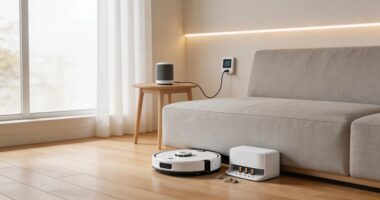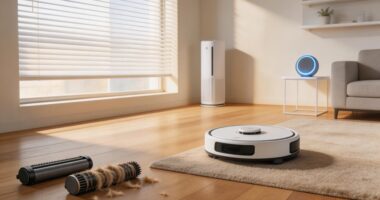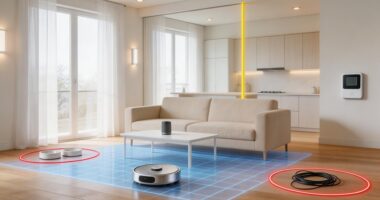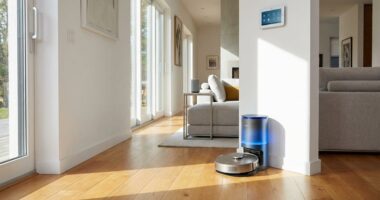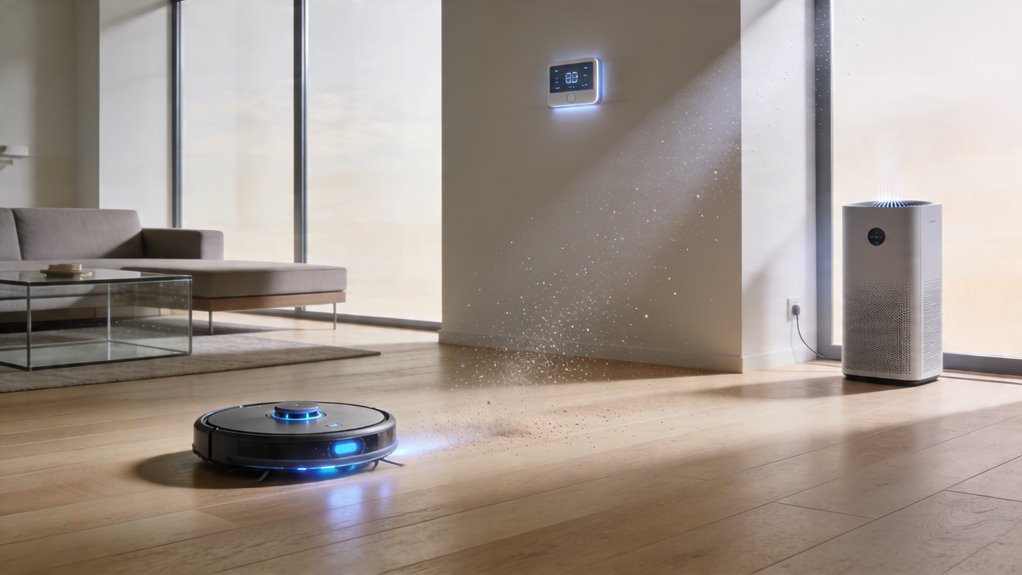
Choosing the best robot vacuum for allergies – the key breakdown.
Airborne dust, pet dander, and pollen settle into carpet fibers and hard-floor seams where standard vacuums redistribute particles instead of containing them — and not every robot vacuum marketed as HEPA actually seals the airflow path end to end.
We evaluated five robot vacuums against the specific demands of allergy-sensitive households: true HEPA filtration (H13 or higher), sealed airflow, suction calibrated for fine particulate extraction, self-emptying bases that contain rather than release allergens during disposal, and anti-tangle brushroll design.
The Shark AV2610WA, NARWAL Freo Z10 Ultra, DREAME L50 Ultra, Shark AI with XL HEPA Base, and Roborock Qrevo Curv each scored differently across those criteria.
By the end of this breakdown, you will know which model delivers the highest-consensus allergen containment, which minimizes disposal contact, and where each unit’s trade-offs become practical liabilities for allergy sufferers.
Key Points
- True HEPA filtration (H13 or higher) capturing 99.97% of particles down to 0.3 microns is essential for effective allergen removal.
- A sealed airflow system is equally critical, preventing captured particles from escaping back into the room during operation.
- Self-emptying bases must also filter to HEPA standards; otherwise, docking transfers allergens rather than containing them.
- Top picks include the DREAME L50 Ultra (19,500 Pa), Roborock Qrevo Curv (18,500 Pa), NARWAL Freo Z10 Ultra, and both Shark models.
- Anti-tangle brushrolls and consistent suction above 15,000 Pa ensure deep carpet allergen extraction without performance degradation mid-run.
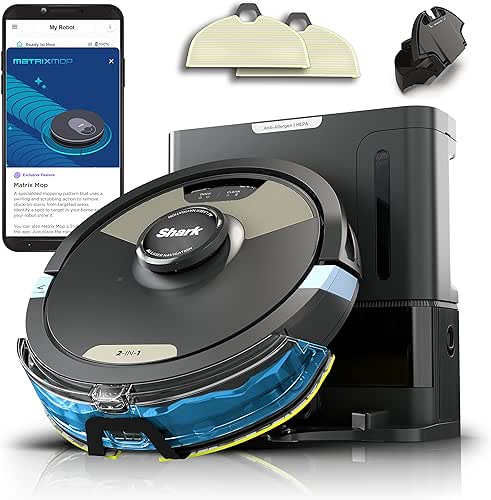
| #5 – Shark Robot Vacuum & Mop Combo (AV2610WA) |
|
Sonic Mopping Pick | Filtration: True HEPA; captures 99.97% of dust and allergens down to 0.3 microns; anti-allergen seal in base | Suction Power: Ultra-powerful suction; no Pa rating specified | Self-Empty Capacity: Up to 60 days | VIEW LATEST PRICE | Read Our Analysis |
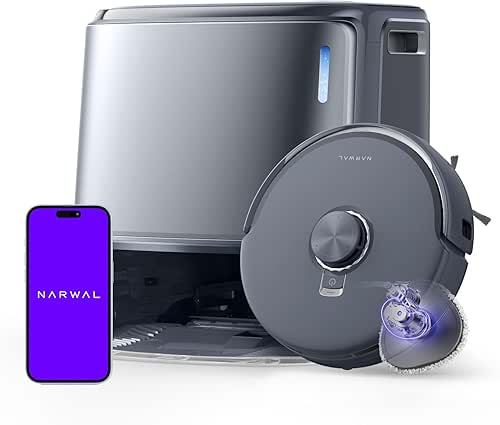
| #4 – NARWAL Freo Z10 Ultra Robot Vacuum and Mop |
|
Best for Pet Owners | Filtration: 2.5 L dust bag; no HEPA specification listed | Suction Power: 18,000 Pa | Self-Empty Capacity: Up to 120 days | VIEW LATEST PRICE | Read Our Analysis |
| #3 – DREAME L50 Ultra Robot Vacuum and Mop Black |

|
Most Advanced Features | Filtration: No HEPA specification listed; auto-empty dustbin in PowerDock | Suction Power: 19,500 Pa | Self-Empty Capacity: Up to 100 days | VIEW LATEST PRICE | Read Our Analysis |
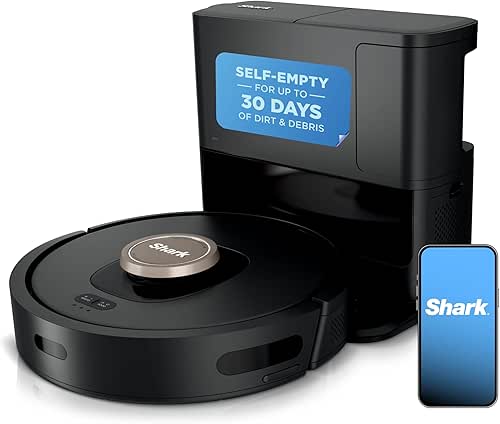
| #2 – Shark AI Robot Vacuum with XL Self-Empty Base |
|
Budget-Friendly Pick | Filtration: True HEPA; captures 99.97% of particles down to 0.3 microns; bagless XL base | Suction Power: Powerful suction; no Pa rating specified | Self-Empty Capacity: Up to 60 days | VIEW LATEST PRICE | Read Our Analysis |
| #1- Roborock Qrevo Curv Robot Vacuum and Mop |

|
Editor’s Choice | Filtration: Auto dust emptying dock; no HEPA specification listed | Suction Power: 18,500 Pa | Self-Empty Capacity: Up to 7 weeks (~49 days) | VIEW LATEST PRICE | Read Our Analysis |
More Details on Our Top Picks
-
Best Overall
Shark Robot Vacuum & Mop Combo (AV2610WA)
The Shark AV2610WA is a robot vacuum and mop designed for allergy sufferers who need reliable, low-contact debris management. Its true HEPA filtration captures 99.97% of particles down to 0.3 microns within a sealed, bagless self-empty base. The base holds up to 60 days of debris before requiring attention. 360° LiDAR navigation maps the home accurately and operates in complete darkness. One limitation is that the bagless design means loose debris is handled directly at empty time, rather than contained in a disposable bag. This suits allergy-sensitive households that prioritize long empty intervals and filtration integrity over hands-free disposal.
- Filtration:True HEPA; captures 99.97% of dust and allergens down to 0.3 microns; anti-allergen seal in base
- Suction Power:Ultra-powerful suction; no Pa rating specified
- Self-Empty Capacity:Up to 60 days
- Mop Functionality:Sonic mopping (100x/min); simultaneous vacuuming and mopping; reusable microfiber pads
- Navigation/Mapping:360° LiDAR; precision home mapping; detects and avoids objects; day/night operation
- Hair Management:Self-cleaning anti-hair wrap brushroll
- Additional Feature:Sonic mopping (100x/min)
- Additional Feature:CleanEdge air-blast detection
- Additional Feature:Bagless self-empty base
-
NARWAL Freo Z10 Ultra Robot Vacuum and Mop
NARWAL Freo Z10 Ultra | *Best for Pet Hair*
The NARWAL Freo Z10 Ultra is a robot vacuum and mop designed for pet owners managing hair, allergens, and floor hygiene. Dual RGB cameras identify 200-plus household objects, maintaining a 150 mm avoidance buffer around pets and obstacles. The certified tangle-free roller with DualFlow anti-tangle system processes pet hair without manual maintenance. The self-emptying dock holds up to 120 days of debris, and the mop wash cycle reaches 167°F on the final rinse for allergen removal on hard floors. One limitation is that it only supports 2.4 GHz Wi-Fi, requiring router compatibility checks before purchase. Pet owners prioritizing low-maintenance hair and allergen management will find this a practical fit.
- Filtration:2.5 L dust bag; no HEPA specification listed
- Suction Power:18,000 Pa
- Self-Empty Capacity:Up to 120 days
- Mop Functionality:EdgeSwing mop extends to edges/corners; 8 N downward pressure; hot-water wash up to 167°F
- Navigation/Mapping:Dual RGB cameras with AI chips; identifies 200+ objects; real-time adaptive cleaning
- Hair Management:Certified tangle-free brush; DualFlow anti-tangle side brush system
- Additional Feature:Hot-water mop washing/drying
- Additional Feature:Real-time pet avoidance mode
- Additional Feature:200+ object AI detection
-
DREAME L50 Ultra Robot Vacuum and Mop Black
DREAME L50 Ultra Robot Vacuum and Mop
The DREAME L50 Ultra is a high-specification robot vacuum and mop designed for allergy sufferers who prioritise automated maintenance and deep cleaning. Its Vormax motor delivers 19,500 Pa of suction, effective for extracting fine dust from floor gaps and carpet fibers. The PowerDock auto-empties for up to 100 days and hot-dries the mop pads to reduce mold growth. ProLeap legs extend to 6 cm, allowing the unit to cross thresholds without manual repositioning. One limitation is that the dock’s footprint is substantial, making it unsuitable for small laundry rooms or narrow entryways. Allergy sufferers with adequate floor space will find this unit meets high-maintenance automation needs effectively.
- Filtration:No HEPA specification listed; auto-empty dustbin in PowerDock
- Suction Power:19,500 Pa
- Self-Empty Capacity:Up to 100 days
- Mop Functionality:Extendable mop via Dual Flex Arm; hot-water mop rinsing and drying; five carpet/mop modes
- Navigation/Mapping:3D structured light AI navigation; detects and avoids 180+ obstacle types
- Hair Management:HyperStream Detangling DuoBrush (bristled + TPU rubber); prevents tangles on all floor types
- Additional Feature:ProLeap 6 cm stair crossing
- Additional Feature:Dual Flex Arm edge/corner reach
- Additional Feature:Five carpet care modes
-
Shark AI Robot Vacuum with XL Self-Empty Base
Budget Pick
The Shark AI Robot Vacuum with XL Self-Empty Base is a budget-friendly robot vacuum suited to allergy sufferers who want low-maintenance cleaning. The HEPA-filtered base holds up to 60 days of debris before requiring contact with collected dust. True HEPA filtration captures 99.97% of particles down to 0.3 microns. LiDAR mapping delivers systematic, grid-based coverage rather than random navigation. One limitation is that it has no mopping function, so hard floors are vacuumed only and not wiped down. Allergy-conscious buyers on a tighter budget who prioritise hands-off dust management will find this a practical, capable option.
- Filtration:True HEPA; captures 99.97% of particles down to 0.3 microns; bagless XL base
- Suction Power:Powerful suction; no Pa rating specified
- Self-Empty Capacity:Up to 60 days
- Mop Functionality:No mopping capability
- Navigation/Mapping:360° LiDAR; methodical mapping; detects and avoids objects; day/night operation
- Hair Management:Self-cleaning brushroll captures pet hair, dust, and dander
- Additional Feature:120-minute runtime
- Additional Feature:Alexa/Google voice control
- Additional Feature:Recharge and resume cleaning
-
Roborock Qrevo Curv Robot Vacuum and Mop
Verdict: Editor’s Choice
The Roborock Qrevo Curv is a robot vacuum and mop designed for allergy sufferers who prioritize deep cleaning with minimal manual maintenance. Its 18,500 Pa suction extracts deep-embedded dust and pet hair, the zero-tangle DuoDivide brush eliminates manual debris removal, and the Multifunctional Dock 3.0 washes mop pads at 167°F, auto-empties for up to seven weeks, and dries pads with warm air. One limitation is that it only supports 2.4 GHz WiFi, which can complicate setup on newer mesh-network systems. This suits allergy-prone households wanting a genuinely hands-off cleaning and maintenance cycle.
- Filtration:Auto dust emptying dock; no HEPA specification listed
- Suction Power:18,500 Pa
- Self-Empty Capacity:Up to 7 weeks (~49 days)
- Mop Functionality:Edge Mopping System; 17 mm mop lift; 167°F hot water mop washing and warm air drying
- Navigation/Mapping:RGB cameras, structured light, PreciSense LiDAR; recognizes 62+ object types
- Hair Management:DuoDivide main brush with zero-tangling design for long hair and pets
- Additional Feature:Built-in offline voice control
- Additional Feature:17 mm mop lift transition
- Additional Feature:AdaptiLift chassis adjustment
Factors to Consider When Choosing a Robot Vacuum for Allergies
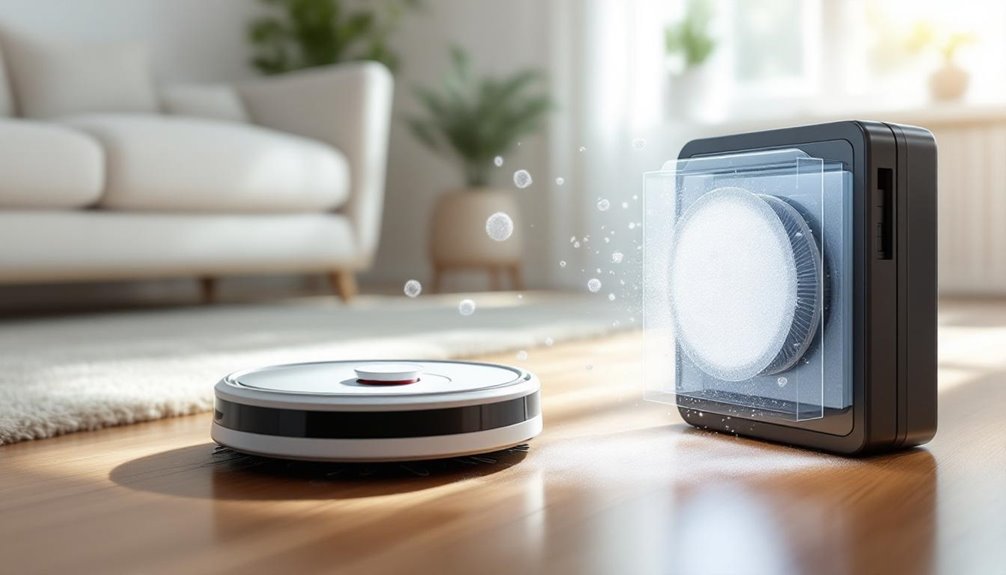
When you’re shopping for a robot vacuum specifically to manage allergies, a few specs matter more than the headline price. You’ll want to check filtration quality — whether it uses a true HEPA filter or just a HEPA-style one — plus whether the vacuum has a fully sealed system that keeps captured allergens from leaking back out. Self-emptying base capacity, suction levels, and how the brushroll handles pet hair and debris are all worth comparing, since a gap in any one of these can undercut an otherwise solid machine.
HEPA Filtration Quality
HEPA filtration quality is the most critical specification for allergy sufferers evaluating a robot vacuum. A true HEPA filter captures at least 99.97% of particles down to 0.3 microns, covering pollen, pet dander, and fine dust. Filter grade alone is insufficient without a sealed system — one where the entire airflow path is enclosed so particles cannot escape through gaps around the filter housing. An H14 filter rated at 99.995% capture efficiency loses practical value inside an unsealed unit. Self-emptying docks that deposit debris into a sealed container reduce direct allergen exposure during emptying. Filters should be replaced on schedule, as a saturated HEPA filter measurably degrades capture performance.
Sealed Allergen Containment
Sealed allergen containment determines whether a robot vacuum captures particles permanently or simply moves them from floor to air. A fully sealed path from brush roll through dustbin and out through the HEPA filter prevents particle escape mid-cycle — gaps in that path defeat the purpose of filtration entirely.
Self-emptying bases with enclosed dust bags extend that containment by allowing weeks or months of operation without direct contact with collected debris. Airtight transfer mechanisms between robot and base matter, as do replacement bags that seal on removal. An unsealed dustbin releases collected particles back into the air during emptying. Washable pre-filters maintain system efficiency between replacements without recurring cost.
Self-Emptying Base Capacity
Self-emptying base capacity determines how often you interact with collected debris — a meaningful factor for allergy sufferers, since each contact point is an opportunity to disturb trapped dust, dander, and pollen.
For pet owners or high-traffic homes, bases rated for 30–60 days of debris storage reduce handling frequency to once or twice a month. Sealed, disposable dust bags contain particles more effectively than open containers, which can release debris during removal. Match capacity to your actual cleaning load: a single-person apartment requires substantially less storage volume than a five-person home with pets, regardless of what capacity figures appear in product marketing.
Suction Power Levels
Suction power requirements vary depending on floor type and household allergen load. For allergy sufferers, pollen and pet dander embed in carpet fibers and require sustained airflow force to extract — a minimum of 15,000–18,000 Pa for medium-to-deep pile carpet. Raw Pascal ratings matter less if suction degrades as the dustbin fills; consistent motor performance across a full run is a more reliable indicator of real-world effectiveness. Auto-boost modes that increase airflow on carpet contact combine agitation with stronger pull, improving allergen extraction. Sealed airflow paths are equally critical — gaps around the filter redistribute particles rather than capturing them.
Brushroll Hair Management
Brushroll design directly affects allergen containment, cleaning frequency, and airflow consistency. Hair accumulation on a brushroll traps dander, reduces suction, and requires manual removal that disturbs captured particles. Rubber or mixed-material brushrolls with anti-tangle construction move debris without retaining it. Tool-free, removable brushrolls allow thorough washing rather than strand-by-strand extraction. A self-cleaning brushroll mechanism further limits how often direct contact with collected debris is necessary. Brushroll performance is not independent of filtration — restricted airflow from hair buildup reduces filter efficiency, so both components need to meet a functional standard for allergen containment to hold.
Air Quality Certification
Air quality certification determines whether a robot vacuum reduces airborne allergens or simply redistributes them.
True HEPA filtration rated H13 or higher captures at least 99.97% of particles down to 0.3 microns, covering pollen, dust mite debris, and mold spores. Manufacturer claims require third-party verification from AHAM, ECARF, or an accredited ISO lab to confirm the filtration performs as labeled. A sealed airflow system is equally necessary — gaps in the housing allow captured particles to escape back into the room. For models with self-emptying docks, the dock itself must also filter to HEPA standards, or the collection process transfers the problem rather than resolving it.
Frequently Asked Questions
Can Robot Vacuums Completely Eliminate Pet Dander From My Home?
Robot vacuums cannot completely eliminate pet dander from your home. They reduce dander significantly, but combining them with air purifiers, regular grooming, and manual cleaning produces the best results.
How Often Should I Replace HEPA Filters in Robot Vacuums?
HEPA filters in robot vacuums typically need replacement every 2-3 months under normal use. Homes with heavy-shedding pets require monthly filter changes to maintain peak allergen-capturing performance.
Are Robot Vacuums Safe for People With Severe Chemical Sensitivities?
Robot vacuums can be safe for people with severe chemical sensitivities when chosen carefully. Look for models with no synthetic fragrances or chemical-coated filters, such as the Shark AI Robot Vacuum with XL HEPA Self-Empty Base, which uses a true HEPA filter without added scents. Airing out the vacuum before first use and avoiding scented maintenance products reduces the risk of triggering sensitivities.
Do Robot Vacuums Help Reduce Airborne Allergens While Running?
Robot vacuums can help reduce airborne allergens while they are running. They capture dust, pet dander, and pollen from floors, preventing these particles from becoming airborne again when someone walks through the home.
Can Mold Grow Inside Robot Vacuum Dustbins Over Time?
Mold can grow inside a robot vacuum’s dustbin over time, particularly when wet debris has been vacuumed up. Emptying the dustbin frequently, wiping it dry, and cleaning it thoroughly after each use prevents mold buildup.
Conclusion
The Roborock Qrevo Curv leads this roundup with 18,500 Pa HyperForce suction paired with a Multifunctional Dock 3.0 that washes mop pads at 167°F, the only pick in this lineup that addresses both airborne allergen capture and surface-bacteria removal in a single cycle. For buyers on a tighter budget, the Shark AI Robot Vacuum with XL HEPA Self-Empty Base delivers true HEPA filtration and a 60-day base at a more accessible price point. Watch the full ranked video breakdown on the ProGadgetPicks YouTube channel for a side-by-side comparison of all five products. For your next research stop, read our Best Robot Vacuums With Obstacle Avoidance roundup on ProGadgetPicks.com.

Michael Haralson spent 15 years at Nokia Mobile Phones across six progressive global roles covering product marketing, sales operations, corporate strategy, and business development in Europe, China, and Asia Pacific. He evaluated hundreds of technology products and partnerships, managed roadmap sessions with operators including Vodafone, AT&T, and China Mobile, and launched 50+ products internationally. After Nokia Mobile Phones, he founded JetSpark Robotics with IBM Watson and Intel partnerships.
He currently writes on AI simulation, multi-sensor fusion, and synthetic data for a defense technology company. His 30+ published technical articles cover the same sensor architectures (LiDAR, RADAR, cameras, infrared) found inside the smart home products he evaluates. He holds four IBM AI certifications.
His approach: technology changes fast, so he takes a snapshot of what’s currently available in each product category, evaluates the set against real use cases, and picks the ones worth your money for the next two years. Because smart home products are multi-year investments that need to work with the rest of your home, he pays particular attention to interoperability — whether a product plays well with the other technology already in your house. He holds four IBM AI certifications and founded a robotics startup with IBM Watson and Intel partnerships.