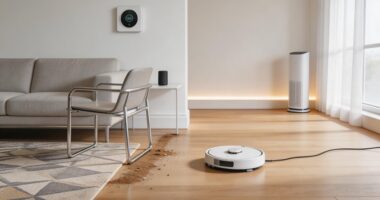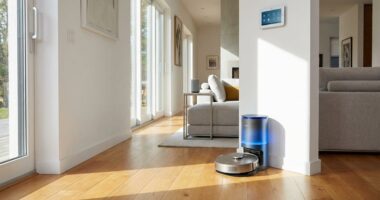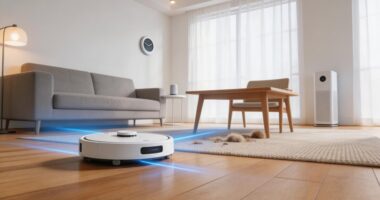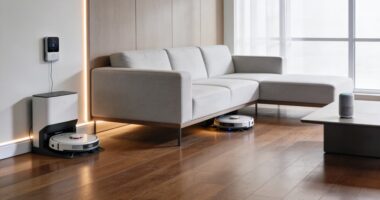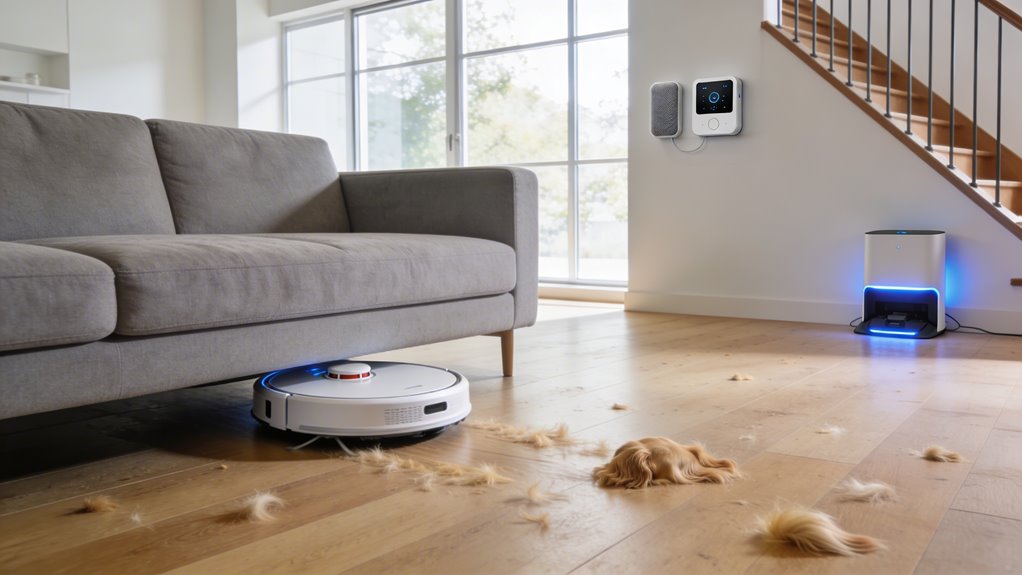

Dog hair embeds in carpet fibers, tangles around brush rolls, and clogs standard suction inlets faster than most robot vacuums can compensate. The result: mid-cycle jams, reduced pickup, and a machine that needs more babysitting than the dog.
We evaluated five robot vacuums against the specific demands of dog-owner households: embedded fur extraction from carpet, anti-tangle brush design for daily shedding, self-emptying capacity for high-volume hair, and HEPA filtration for dander control.
The five models reviewed are the Tikom L8000 Plus, Roborock Q7 M5+, Shark AI Ultra, eufy E25, and Roborock Saros 10R.
By the end of this article, you will know which model performs best for your floor type, furniture clearance, and maintenance tolerance.
Key Points
- The Roborock Saros 10R leads with 22,000 Pa suction and a Zero-Tangling DuoDivide brush, making it exceptionally effective for heavy dog shedding.
- Anti-tangle brush designs—including silicone rollers and dual-brush systems—are critical for preventing hair wraps and mid-cycle jams.
- Self-emptying docks range from 30-day bagless (Shark AI Ultra) to 90-day bagged capacity (Tikom L8000 Plus), reducing hands-on maintenance significantly.
- The Shark AI Ultra’s True HEPA filtration captures 99.97% of particles, making it the top choice for dog owners with allergies.
- Most top models only support 2.4 GHz Wi-Fi, which buyers should verify for compatibility with their home network before purchasing.
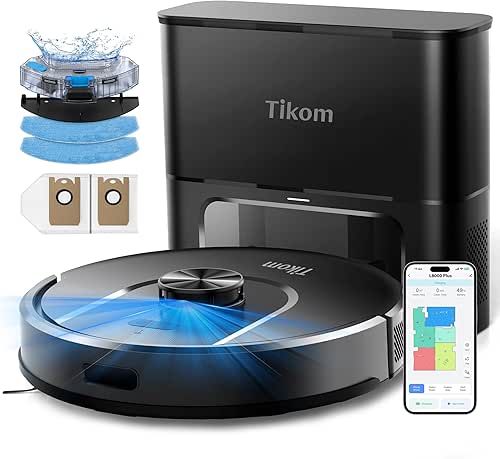
| Tikom Robot Vacuum and Mop with Self-Emptying Base (L8000 Plus) |
|
Best Value Pick | Suction Power: 6,000 Pa | Self-Empty Capacity: 3 L dustbag (~90 days) | Vacuum + Mop: Yes — sweeping and mopping with 3 water flow settings | VIEW LATEST PRICE | Read Our Analysis |
| Roborock Q7 M5+ Robot Vacuum and Mop |

|
Best Anti-Tangle | Suction Power: 10,000 Pa | Self-Empty Capacity: 2.7 L sealed dustbag (~7–9 weeks) | Vacuum + Mop: Yes — vacuum and mop with 3 water flow settings | VIEW LATEST PRICE | Read Our Analysis |
| Shark AI Ultra Robot Vacuum with Self-Empty Base |

|
Best for Simplicity | Suction Power: Not specified (described as powerful) | Self-Empty Capacity: Bagless base (~30 days) | Vacuum + Mop: No — vacuum only | VIEW LATEST PRICE | Read Our Analysis |
| eufy E25 Robot Vacuum and Mop Combo |

|
Best Mopping Performance | Suction Power: 20,000 Pa | Self-Empty Capacity: 3 L dustbag (~75 days) | Vacuum + Mop: Yes — vacuum and HydroJet roller mop with auto mop washing | VIEW LATEST PRICE | Read Our Analysis |
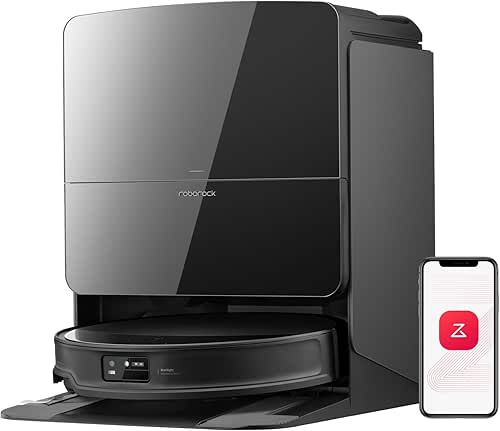
| Roborock Saros 10R Self-Emptying Robot Vacuum and Mop |
|
Best Overall | Suction Power: 22,000 Pa | Self-Empty Capacity: Auto dust collection (~60 days) | Vacuum + Mop: Yes — dual spinning mops with auto lift on carpet, hot water mop washing | VIEW LATEST PRICE | Read Our Analysis |
More Details on Our Top Picks
-
Tikom Robot Vacuum and Mop with Self-Emptying Base (L8000 Plus)
Best for Pet Hair
The Tikom L8000 Plus is a robot vacuum and mop designed for households with year-round shedding dogs.
Key Features:
- 6,000 Pa suction for pet hair removal on hard floors and carpet
- 3-litre self-emptying dustbag with up to 90 days of hands-off operation
- LiDAR navigation with app-based no-go zone mapping
One limitation is that the mop holder must be removed manually before the unit transitions to carpet, requiring periodic user intervention.
Suited to dog owners who want a low-maintenance cleaning routine and have a mix of hard flooring and carpet.
- Suction Power:6,000 Pa
- Self-Empty Capacity:3 L dustbag (~90 days)
- Vacuum + Mop:Yes — sweeping and mopping with 3 water flow settings
- Navigation Type:360° LiDAR
- Battery Runtime:Up to 150 minutes
- App & Voice Control:Tikom app + Alexa; 2.4 GHz and 5 GHz Wi-Fi
- Additional Feature:5 multi-floor maps
- Additional Feature:2.4 & 5 GHz Wi-Fi
- Additional Feature:90-day hands-free capacity
-
Roborock Q7 M5+ Robot Vacuum and Mop
Best for Pet Hair
Roborock Q7 M5+
A robot vacuum and mop designed for dog owners managing heavy, recurring shedding. The dual anti-tangle system combines a JawScraper main brush with a 0% hair-tangling side brush, reducing mid-cycle maintenance. Suction reaches 10,000Pa, sufficient for embedded pet hair in carpet and hard floors. The RockDock Plus auto-empties into a 2.7L sealed bag, with a replacement interval of approximately seven to nine weeks. One limitation is that the unit only supports 2.4GHz Wi-Fi, making it incompatible with routers running exclusively on 5GHz. Dog owners with high-shedding breeds who want a low-maintenance emptying cycle will find this a practical fit.
- Suction Power:10,000 Pa
- Self-Empty Capacity:2.7 L sealed dustbag (~7–9 weeks)
- Vacuum + Mop:Yes — vacuum and mop with 3 water flow settings
- Navigation Type:PreciSense LiDAR
- Battery Runtime:Not specified
- App & Voice Control:Roborock app; 2.4 GHz Wi-Fi only; no voice control specified
- Additional Feature:0% hair-tangling side brush
- Additional Feature:JawScrapers main brush
- Additional Feature:7–9 weeks dust capacity
-
Shark AI Ultra Robot Vacuum with Self-Empty Base
Best for Pet Hair
The Shark AI Ultra Robot Vacuum is designed for pet owners managing heavy daily shedding. Its self-cleaning brushroll resists hair tangling, and 360° LiDAR navigation maps the home while avoiding obstacles in low-light conditions. The bagless self-empty base holds debris for up to 30 days, and True HEPA filtration captures 99.97% of particles down to 0.3 microns, which matters for allergy sufferers. One limitation is that the 120-minute runtime may require multiple sessions to cover larger homes. This suits pet owners in small-to-medium homes who want low-maintenance daily cleaning without frequent filter or bin attention.
- Suction Power:Not specified (described as powerful)
- Self-Empty Capacity:Bagless base (~30 days)
- Vacuum + Mop:No — vacuum only
- Navigation Type:360° LiDAR
- Battery Runtime:Up to 120 minutes
- App & Voice Control:App + Alexa and Google Assistant; Wi-Fi (specs not detailed)
- Additional Feature:Matrix grid cleaning
- Additional Feature:Bagless self-empty base
- Additional Feature:30-day dirt capacity
-
eufy E25 Robot Vacuum and Mop Combo
A robot vacuum-mop combo for households managing daily dog-hair buildup on hard floors.
- DuoSpiral brushes resist tangling around pet hair
- 20,000 Pa suction extracts fur from grout lines and floor gaps
- HydroJet mop releases clean water twice per second; the all-in-one station auto-empties into a 3 L bag, self-washes the mop, and hot-air dries it at 50°C
One limitation is that it only connects to 2.4 GHz Wi-Fi, which can complicate setup on newer dual-band routers.
Suited to pet owners with hard floors who want vacuuming, mopping, and station maintenance handled automatically.
- Suction Power:20,000 Pa
- Self-Empty Capacity:3 L dustbag (~75 days)
- Vacuum + Mop:Yes — vacuum and HydroJet roller mop with auto mop washing
- Navigation Type:Laser-guided LiDAR
- Battery Runtime:Up to 125 minutes
- App & Voice Control:eufy app + Alexa, Google Assistant, Siri; 2.4 GHz Wi-Fi only
- Additional Feature:HydroJet roller mop
- Additional Feature:CornerRover arm reach
- Additional Feature:10.8 mm mop lift
-
Roborock Saros 10R Self-Emptying Robot Vacuum and Mop
Best for Pet Hair
The Roborock Saros 10R is a robot vacuum and mop designed for pet owners dealing with long fur, low furniture, and carpeted rooms.
Key Features:
- 3.14-inch profile clears low-clearance furniture; Zero-Tangling DuoDivide brush with anti-tangle omnidirectional wheels manages long pet hair mechanically
- 22,000 Pa suction handles carpeted surfaces without performance reduction
- Dock 4.0 supports 60-day debris capacity, hot-water mop washing, and automatic detergent dispensing
One limitation is that it only supports 2.4 GHz Wi-Fi, which may conflict with 5 GHz-only network setups.
This suits pet owners with mixed flooring and furniture-dense rooms who want minimal manual intervention.
- Suction Power:22,000 Pa
- Self-Empty Capacity:Auto dust collection (~60 days)
- Vacuum + Mop:Yes — dual spinning mops with auto lift on carpet, hot water mop washing
- Navigation Type:StarSight Autonomous System 2.0 with 3D sensing
- Battery Runtime:Not specified (2.5-hour quick charging noted)
- App & Voice Control:Roborock app + built-in Hello Rocky voice assistant; 2.4 GHz Wi-Fi only
- Additional Feature:3.14-inch slim profile
- Additional Feature:108 obstacle types detected
- Additional Feature:Built-in Hello Rocky assistant
Factors to Consider When Choosing the Best Robot Vacuums for Dog Hair
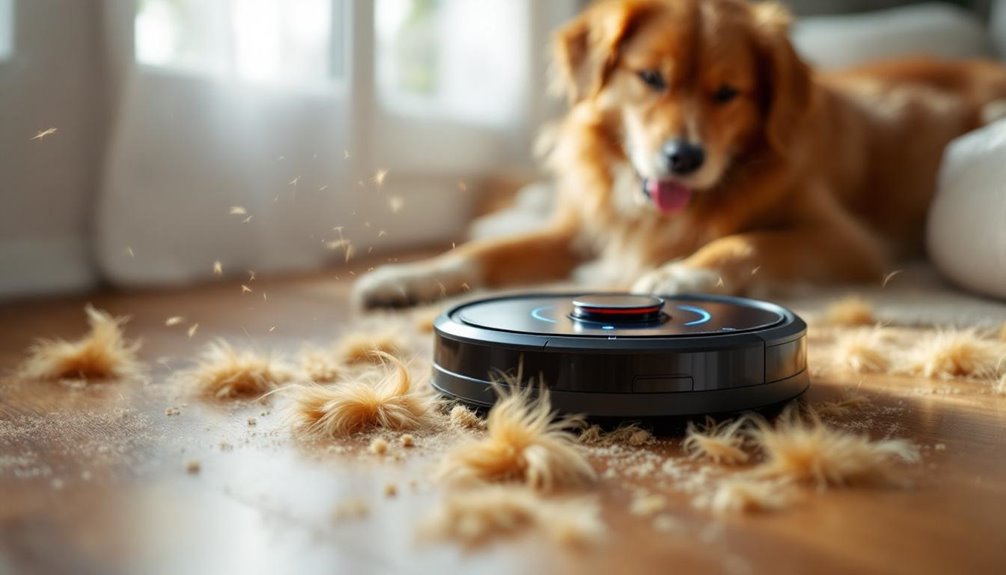
Choosing a robot vacuum for dog hair comes down to a few key specs that actually affect day-to-day performance. You’ll want to look at suction power, brush design, navigation quality, filtration, and how long the vacuum runs before it needs a recharge or self-empty cycle. Getting these right means less time managing the robot and more time letting it do its job.
Suction Power Matters
Suction power is a primary performance variable when selecting a vacuum for dog hair. Multi-thousand Pascal ratings outperform low-suction units on dense carpet, where dog hair embeds below surface fibers. On hard floors, that performance gap narrows considerably. Models with automatic carpet boost — suction that increases when pile is detected — maintain reasonable battery consumption across a full run without reducing performance on carpet. High suction alone is insufficient if hair tangles around the brush or clogs a narrow inlet. A sealed airflow path paired with a high-efficiency filter extends performance to dander capture, not just visible hair removal.
Anti-Tangle Brush Design
Brush design determines how often maintenance interrupts cleaning cycles. A brush that clogs with hair every two days negates suction performance regardless of rated airflow.
Silicone and rubber roll designs reduce hair wrap compared to traditional bristle systems, allowing strands to slide free rather than binding around the axle. Dual-brush configurations — one fixed comb, one flexible main roll — manage long fur without jamming. Some side brushes incorporate hair-cutting profiles along the axle contact points, preventing wrap accumulation between cleaning sessions. Confirm whether the brush mechanism lifts during docking; brushes that remain in contact with the floor during charging can redistribute collected hair back onto clean surfaces.
Navigation and Mapping
Navigation quality determines how completely a robot vacuum covers the floor area where pet hair accumulates. LiDAR-based systems build accurate floor maps and maintain consistent cleaning paths, including the corners and edges where shedding concentrates. Multi-floor mapping stores optimized routes for each level, which matters when a dog moves between floors throughout the day. Real-time obstacle detection allows the robot to reroute around pet beds, bowls, and toys without stalling. No-go zones exclude muddy entry areas or delicate rugs. Recharge-and-resume completes large rooms without leaving uncleaned strips when battery runs low. Inconsistent mapping reduces suction effectiveness regardless of motor power.
Maintenance and Filtration
Filtration and maintenance requirements are as consequential as raw cleaning performance when selecting a vacuum for dog hair. A sealed HEPA or high-efficiency filter captures particles down to 0.3 microns, the size range where pet dander concentrates. Washable pre-filters reduce replacement frequency, though most HEPA filters require swapping every three to twelve months based on shedding volume. Anti-tangle brush rolls prevent hair accumulation that can extend a five-minute task to twenty minutes or more. A self-emptying dock with multi-liter capacity reduces bin-emptying trips. Rollers, filters, and sensors should be accessible without tools to support consistent upkeep.
Runtime and Recharging
Runtime and recharge specs determine whether a robot vacuum completes a full cleaning pass in homes with heavy pet-hair output. For high-shedding households, 90–150 minutes of runtime is the functional minimum. Shorter runtimes interrupt cleaning sessions mid-floor, and resumed coverage is rarely seamless. Auto-recharge-and-resume addresses this directly: the robot docks when battery runs low, recharges, and continues from its last mapped position without manual intervention. Note that high-suction modes on carpet reduce runtime measurably, so real-world performance often falls below rated maximums. Recharge cycles also factor in — a 3-hour recharge paired with a 90-minute runtime creates significant scheduling gaps. Fast-charge models and robots that retain multi-room map progress across multiple recharge cycles deliver more consistent whole-floor coverage.
Frequently Asked Questions
How Often Should I Empty My Robot Vacuum When I Have Dogs?
Empty the robot vacuum after every run when dogs are in the home. Heavy shedders may require mid-cycle emptying to maintain suction. Keeping the bin below half capacity prevents performance loss.
Can Robot Vacuums Handle Wet Dog Hair Effectively?
Robot vacuums are not designed to handle wet dog hair effectively. Moisture causes hair to clump and clog brushes and filters rapidly. Towel-drying your dog before they roam the house reduces this risk significantly.
Are Robot Vacuums Safe to Use Around Dogs?
Robot vacuums are generally safe to use around dogs. A gradual introduction helps pets adjust without fear or anxiety. Most dogs adapt quickly, though some may initially chase or avoid the device.
Do Robot Vacuums Work Well on All Types of Flooring?
Robot vacuums work well on most flooring types, including hardwood, tile, and low-pile carpet. High-pile rugs can pose a challenge, and checking a model’s specifications – such as carpet boost modes and cliff detection ratings – will clarify its limitations.
How Long Do Robot Vacuum Batteries Typically Last per Charge?
Most robot vacuums run between 60 and 120 minutes per charge. Higher-end models, such as those with 5,200mAh batteries, can extend runtime up to 180 minutes, making them well-suited for larger homes. When the battery runs low, these models automatically return to their docking station to recharge.
Conclusion
The Roborock Saros 10R leads this roundup with its Zero-Tangling DuoDivide brush system that achieved 100% tangle resistance in independent lab testing, and its 3.14-inch ultra-slim profile that reaches under furniture where dog hair accumulates unchecked.
Both specs matter in homes with heavy shedding and low-clearance furniture. Buyers prioritizing allergen containment over coverage area should consider the Shark AI Ultra with its True HEPA filtration instead.
Watch the full ranked video breakdown on the ProGadgetPicks YouTube channel for a side-by-side comparison of all five products.
For related buying guidance, see the ProGadgetPicks.com roundup on the [Best Robot Mops for Pet Owners](https://www.progadgetpicks.com/best-robot-mops-pet-owners).

Michael Haralson spent 15 years at Nokia Mobile Phones across six progressive global roles covering product marketing, sales operations, corporate strategy, and business development in Europe, China, and Asia Pacific. He evaluated hundreds of technology products and partnerships, managed roadmap sessions with operators including Vodafone, AT&T, and China Mobile, and launched 50+ products internationally. After Nokia Mobile Phones, he founded JetSpark Robotics with IBM Watson and Intel partnerships.
He currently writes on AI simulation, multi-sensor fusion, and synthetic data for a defense technology company. His 30+ published technical articles cover the same sensor architectures (LiDAR, RADAR, cameras, infrared) found inside the smart home products he evaluates. He holds four IBM AI certifications.
His approach: technology changes fast, so he takes a snapshot of what’s currently available in each product category, evaluates the set against real use cases, and picks the ones worth your money for the next two years. Because smart home products are multi-year investments that need to work with the rest of your home, he pays particular attention to interoperability — whether a product plays well with the other technology already in your house. He holds four IBM AI certifications and founded a robotics startup with IBM Watson and Intel partnerships.