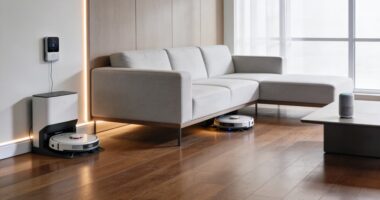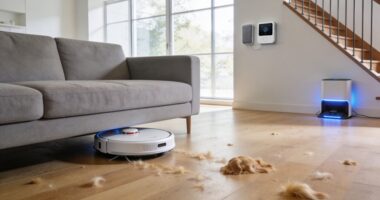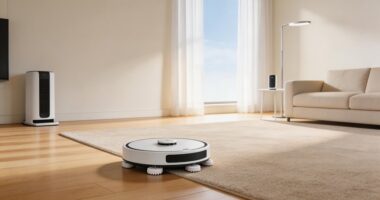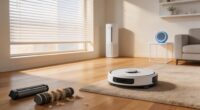
Hard floor homes accumulate fine debris and grit that standard robot vacuums scatter rather than capture — and when furniture clearance runs low, height becomes a hard constraint, not a preference.
We evaluated five of the best robot mops against the specific demands of hard floor households with low-clearance furniture: suction consistency on smooth surfaces, mop pad effectiveness without residue, physical profile and clearance tolerance, and debris containment capacity.
Each unit was assessed on measurable specs rather than brand claims.
The five models covered here — the Shark Matrix Plus, eufy Omni C20, eufy X10 Pro Omni, Roborock Qrevo, and Roborock Saros 10R — represent distinct engineering trade-offs.
By the end, you will have the technical detail needed to match one of these five to your specific floor and furniture situation.
Key Points
- The Roborock Saros 10R’s 3.14-inch profile and Dock 4.0 system washes pads at 176°F and stores 60 days of debris.
- The eufy X10 Pro Omni auto-lifts dual mop pads 12 mm on carpet and heat-dries pads at 45°C.
- The eufy Omni C20’s Pro-Detangle Comb reverses the roller and deploys a comb to automatically remove wrapped hair.
- The Roborock Qrevo delivers 8,000 Pa suction with dual 200 RPM spinning mops and a full-rubber tangle-resistant brush.
- The Shark Matrix Plus runs multiple grid-pattern passes over carpet and self-empties debris for up to 30 days.
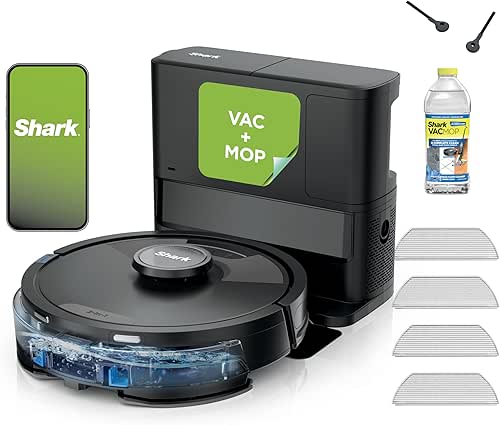
| #5 Shark Matrix Plus Robot Vacuum and Mop (UR2650WS) |
|
Best for Pet Owners | Suction Power: Not specified in Pa; described as “ultra-powerful” | Mop System: Sonic mopping scrubs 100x per minute; washable antimicrobial mopping pads | Auto-Empty Base: Bagless HEPA self-empty base; holds up to 30 days of debris | VIEW LATEST PRICE | Read Our Analysis |
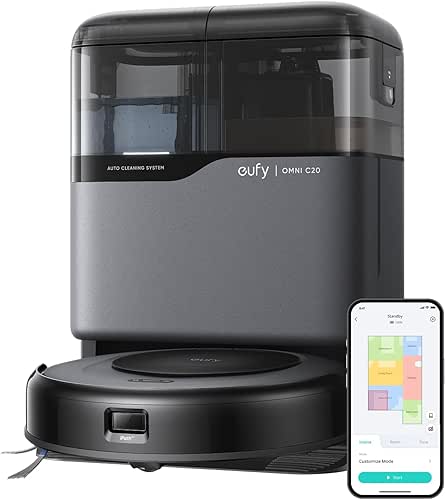
| #4 eufy Omni C20 Robot Vacuum and Mop Combo |
|
Budget-Friendly Pick | Suction Power: 7,000 Pa | Mop System: Dual rotating mops at 180 RPM with 6N pressure | Auto-Empty Base: Auto-emptying included in all-in-one station | VIEW LATEST PRICE | Read Our Analysis |
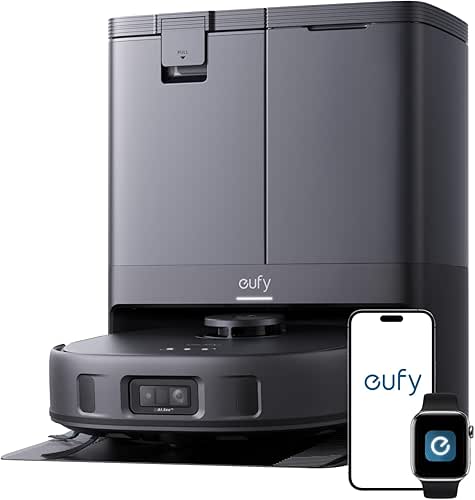
| #3 eufy X10 Pro Omni Robot Vacuum and Mop |
|
Best Value | Suction Power: 8,000 Pa | Mop System: Dual mops with MopMaster 2.0; 12 mm auto-lift on carpets | Auto-Empty Base: 2.5 L dust bag; replace approximately every 2 months | VIEW LATEST PRICE | Read Our Analysis |
| #2 Roborock Qrevo Robot Vacuum and Mop (QV 35A) |

|
Editor’s Choice | Suction Power: 8,000 Pa | Mop System: Dual spinning mops at 200 RPM; 10 mm lift onto low-pile carpets; 30 adjustable water levels | Auto-Empty Base: Sealed 2.7 L dust bag; 7–9 weeks capacity | VIEW LATEST PRICE | Read Our Analysis |
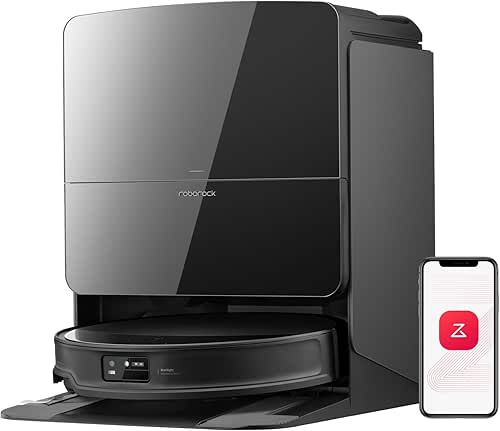
| #1 Roborock Saros 10R Self-Emptying Robot Vacuum & Mop |
|
Premium Pick | Suction Power: 22,000 Pa | Mop System: Dual spinning mops; auto-lift on carpets; extends to reach corners and edges | Auto-Empty Base: 60-day automatic dust collection via Dock 4.0 | VIEW LATEST PRICE | Read Our Analysis |
More Details on Our Top Picks
-
Shark Matrix Plus Robot Vacuum and Mop (UR2650WS)
Shark Matrix Plus UR2650WS
The Shark Matrix Plus is a robot vacuum and mop designed for multi-surface homes with pets.
- The sonic mopping pad completes 100 scrubbing strokes per minute on hard floors.
- Matrix Clean technology runs multiple grid-pattern passes over carpet for more thorough coverage than a single pass.
- The HEPA self-empty base stores debris for up to 30 days with no replacement bags required.
One limitation is that the onboard dust bin holds only 0.22 quarts, requiring frequent direct-bin emptying between base visits.
Homeowners managing multi-surface floors who want automated mopping and vacuuming without recurring base bag costs will find this a practical fit.
- Suction Power:Not specified in Pa; described as “ultra-powerful”
- Mop System:Sonic mopping scrubs 100x per minute; washable antimicrobial mopping pads
- Auto-Empty Base:Bagless HEPA self-empty base; holds up to 30 days of debris
- Mop Washing & Drying:Not included; pads are washable manually
- Navigation Type:360° LiDAR vision for mapping, route planning, and obstacle avoidance
- Wi-Fi Connectivity:2.4 GHz and 5 GHz (no restriction noted); app, Alexa, and Google Assistant compatible
- Additional Feature:CleanEdge air-blast detect
- Additional Feature:30-day bagless base
- Additional Feature:110-min battery life
-
eufy Omni C20 Robot Vacuum and Mop Combo
A robot vacuum and mop combo designed for hard floor households with low-clearance furniture who want a low-intervention cleaning routine. The all-in-one station auto-empties the dustbin, washes the mop pads, and dries them using room-temperature air. The Pro-Detangle Comb reverses the roller brush and deploys a comb mechanism to remove wrapped hair. At 3.35 inches tall, it clears most low furniture without repositioning. One limitation is that it only supports 2.4 GHz Wi-Fi, requiring a network adjustment if your router runs exclusively on 5 GHz.
It suits homeowners with low-clearance furniture who prioritize hands-off maintenance over advanced connectivity options.
- Suction Power:7,000 Pa
- Mop System:Dual rotating mops at 180 RPM with 6N pressure
- Auto-Empty Base:Auto-emptying included in all-in-one station
- Mop Washing & Drying:Auto mop washing; room-temperature air drying
- Navigation Type:Not specified beyond app connectivity and room navigation
- Wi-Fi Connectivity:2.4 GHz only; 5 GHz not supported
- Additional Feature:3.35-inch low profile
- Additional Feature:Room-temp mop drying
- Additional Feature:Transparent water tanks
-
eufy X10 Pro Omni Robot Vacuum and Mop
The eufy X10 Pro Omni is designed for hard floor households managing hair, fur, and hard-to-clean surface transitions with low-clearance furniture.
The pro-detangling roller brush extracts long hair and pet fur without frequent manual clearing. Dual mop pads auto-lift 12 mm upon carpet detection, preventing wet contact with rugs. The all-in-one dock self-washes and heat-dries mop pads at 45°C, auto-empties the dustbin, and refills a 3 L clean-water tank covering approximately 2,000 sq ft per run. One limitation is that it only supports 2.4 GHz Wi-Fi, which may cause setup friction with newer dual-band routers.
Buyers managing mixed hard floors who want low daily maintenance will find this a practical, largely hands-off option.
- Suction Power:8,000 Pa
- Mop System:Dual mops with MopMaster 2.0; 12 mm auto-lift on carpets
- Auto-Empty Base:2.5 L dust bag; replace approximately every 2 months
- Mop Washing & Drying:Auto mop washing and heated drying at 45°C
- Navigation Type:iPath laser navigation with AI.See obstacle avoidance; detects 100+ object types
- Wi-Fi Connectivity:2.4 GHz only; 5 GHz not supported
- Additional Feature:45°C heated mop drying
- Additional Feature:12mm auto mop lift
- Additional Feature:AI detects 100+ objects
-
Roborock Qrevo Robot Vacuum and Mop (QV 35A)
Roborock Qrevo (QV 35A)
The Roborock Qrevo (QV 35A) is a robot vacuum and mop combination suited to households managing pet hair across both carpeted and hard floors. The full-rubber spiral brush and SGS-certified side brush resist hair tangles. Suction reaches 8,000Pa for embedded debris removal. Dual spinning mops operate at 200 RPM across 30 water-level settings, and the dock auto-empties into a sealed 2.7L bag, refills water, and washes and dries the mop pads. One limitation is that the unit only connects to 2.4GHz Wi-Fi, which causes setup friction in homes running primarily 5GHz networks.
Buyers managing mixed hard floors who want a low-maintenance cleaning routine will find this a capable option.
- Suction Power:8,000 Pa
- Mop System:Dual spinning mops at 200 RPM; 10 mm lift onto low-pile carpets; 30 adjustable water levels
- Auto-Empty Base:Sealed 2.7 L dust bag; 7–9 weeks capacity
- Mop Washing & Drying:Dock washes and dries mopping pads
- Navigation Type:PreciSense LiDAR with 360° scanning; Reactive Tech obstacle avoidance
- Wi-Fi Connectivity:2.4 GHz only; 5 GHz not supported
- Additional Feature:30 water-level settings
- Additional Feature:4-floor map support
- Additional Feature:SGS-certified zero tangling
-
Roborock Saros 10R Self-Emptying Robot Vacuum & Mop
The Roborock Saros 10R is a robot vacuum and mop designed for households with pets, long hair, or low-clearance furniture. Its 3.14-inch profile clears low furniture. The Zero-Tangling DuoDivide brush mechanically separates hair strands to prevent jamming. The Dock 4.0 holds 60 days of debris, washes mop pads at 176°F, and dries them at 131°F. One limitation is that it only supports 2.4 GHz Wi-Fi, which can cause connectivity issues with newer routers that default to 5 GHz.
This suits households with long hair and low-clearance furniture who want automated maintenance with minimal manual intervention.
- Suction Power:22,000 Pa
- Mop System:Dual spinning mops; auto-lift on carpets; extends to reach corners and edges
- Auto-Empty Base:60-day automatic dust collection via Dock 4.0
- Mop Washing & Drying:176°F hot water mop washing; 131°F hot air drying
- Navigation Type:StarSight Autonomous System 2.0 with 3D sensing; detects 108 obstacle types
- Wi-Fi Connectivity:2.4 GHz only; 5 GHz not supported
- Additional Feature:3.14-inch ultra-slim profile
- Additional Feature:Built-in RGB camera
- Additional Feature:176°F hot-water washing
Factors to Consider When Choosing Robot Mops
Picking the right robot mop comes down to a handful of specs that actually affect daily use. You’ll want to look at mopping technology and performance, suction power and filtration, navigation and obstacle avoidance, self-cleaning features, and water tank capacity. Each of these factors shapes how well the machine handles your floors — and how much work you’re still doing yourself.
Mopping Technology and Performance
Mopping technology determines whether a robot cleans effectively or simply redistributes surface moisture. Oscillating and sonic scrubbing heads generate hundreds of movements per minute, applying enough mechanical force to loosen dried spills rather than smearing them. Dual spinning heads with measurable contact pressure perform real scrubbing work, which produces consistent results on tile and sealed hardwood.
Water control is equally consequential. Adjustable flow levels allow reduced moisture output on hardwood and higher output on tile. Auto-lift systems raise the mop pad when the robot crosses a rug, keeping carpet dry without manual intervention.
Maintenance design affects long-term performance. Self-washing docks, heated pad drying, and washable pads limit bacterial buildup and preserve cleaning consistency over time.
Suction Power and Filtration
Suction power and filtration are practical performance criteria that directly affect how well a robot vacuum handles fine particles, pet hair, and allergen control. Units rated above 7,000 Pa manage dry debris and carpet pickup more effectively than lower-rated models. A sealed dust path paired with True HEPA filtration — rated at 99.97% at 0.3 microns — captures fine particles rather than recirculating them through the air. A self-emptying base limits direct contact with collected debris. On combo units, the wet and dry systems must be physically separated; moisture reaching filters or motors degrades performance and shortens the machine’s useful life.
Navigation and Obstacle Avoidance
Navigation and obstacle avoidance capabilities determine how thoroughly and reliably a robot mop covers a home. LiDAR-based systems scan in 360° to build accurate floor maps, enabling methodical cleaning paths that function in complete darkness. Camera- and AI-powered obstacle detection identifies cords, shoes, and toys before contact, reducing mid-cycle entanglements. Carpet-detection with auto-lift mop modules keeps wet pads off rugs. Multi-floor mapping and virtual no-go zones allow permanent exclusion of stairs, pet bowls, or furniture. Low-profile designs with edge-detection extend reach under furniture and along baseboards, where debris tends to accumulate most consistently.
Self-Cleaning and Maintenance Features
Self-cleaning and maintenance features determine how much hands-on upkeep a robot mop requires between cleaning cycles. Docks that auto-empty debris should hold at least 30 to 60 days’ worth before manual intervention is needed. Auto-wash systems require heated drying, not room-temperature airflow, to prevent bacterial buildup on mopping pads. Separate dirty-water tanks with transparent walls allow water levels to be monitored without opening the dock. Self-refilling clean-water tanks extend operational run time between manual refills. Antimicrobial, washable mopping pads reduce replacement frequency and inhibit bacterial growth. Anti-tangle brush systems using combs or reversing rollers clear long hair without manual removal. Filter life, pad replacement schedules, and lint trap intervals should be reviewed before concluding a dock operates independently.
Water Tank and Coverage
Water tank capacity determines how much floor area a robot mop can cover before requiring a refill. Larger tanks ranging from 1 to 3 liters can cover several hundred to several thousand square feet per fill. Tanks under 0.5 liters typically handle 100 to 300 square feet before intervention is needed. Separate clean and dirty water tanks prevent soiled water from recirculating across the floor. Adjustable flow settings allow lower moisture output for hardwood and higher output for tile or heavily soiled surfaces. Auto-refill docks eliminate manual refilling during whole-home runs, and pad drying or heating between sessions prevents odor buildup.
Floor Type Compatibility
Floor type determines which robot mop specifications matter most. Hardwood and laminate require low moisture output, since excess water penetrates seams and causes warping or swelling over repeated cycles. Tile and sealed stone tolerate higher water volume and benefit from spinning or sonic scrubbing pads that reach grout lines and break down dried residue. Homes with area rugs need a model with automatic pad-lift or carpet-detection, preventing saturation of fabric when the unit transitions surfaces. Unsealed wood, waxed hardwood, and natural stone require cool water temperatures and pH-neutral cleaning solutions — high-heat drying cycles and strong detergents degrade these surfaces. Reusable, washable pads reduce residue transfer that gradually dulls sensitive finishes.
Smart App and Connectivity
Selecting a robot mop app requires evaluating connectivity standards, control architecture, and feature depth before committing to a model.
Wi-Fi band compatibility determines whether setup succeeds at all. Most robot mops require a 2.4 GHz connection; a dual-band router configured to broadcast only 5 GHz will prevent the device from pairing entirely. App control architecture divides into local, cloud, or hybrid operation. Local control preserves scheduled runs during internet outages, while cloud access enables remote commands, voice assistant integration, and firmware delivery. Core scheduling features worth confirming include room-by-room zones, no-go boundaries, multi-floor map storage, and per-room water level adjustment. Verify Alexa or Google Assistant compatibility against the manufacturer’s current integration list. Review the update history for patch frequency and authentication practices, as an app storing a detailed floor plan represents a security surface that warrants consistent maintenance.
Size and Accessibility
Three measurements determine whether a robot vacuum will navigate a home without stalling: clearance under furniture, doorway width, and threshold height. Most models require at least 3.5 inches (9 cm) of vertical clearance and 24–28 inches (60–70 cm) of turning radius to move between rooms. Units in the 12–14 inch (30–36 cm) diameter range perform better in narrow hallways than wider models. On carpeted floors, robots without carpet-detection or an auto-lift mop will deposit moisture along rug edges on every cleaning cycle. The docking area also needs several inches of open space to allow tank and pad changes.
Frequently Asked Questions
How Often Should Robot Mop Pads Be Replaced or Washed?
Reusable mop pads need washing after every use and replacement every 2–3 months. Pads that are visibly worn, stained, or carrying odors should be swapped out before that window.
Can Robot Mops Handle Pet Hair and Liquid Spills Simultaneously?
Hybrid robot vacuum-mop combos can handle pet hair and liquid spills simultaneously, but standard robot mops cannot. These units vacuum debris first, then mop, delivering comprehensive floor cleaning in one pass.
Are Robot Mops Safe to Use on Heated or Radiant Floors?
Robot mops are generally safe to use on heated or radiant floors, though checking the manufacturer’s guidelines before use is recommended. Most modern models handle radiant heat well, but excessive temperatures can affect sensor accuracy and cleaning pad performance.
Do Robot Mops Work Effectively on Grout Lines Between Tiles?
Robot mops can clean grout lines with varying effectiveness depending on the model. Most standard pads glide over surfaces without reaching recessed grout, but models featuring vibrating or oscillating scrubbing pads can agitate and lift embedded dirt more reliably.
Can Robot Mops Be Scheduled to Clean While You Sleep?
Most robot mops can be scheduled to clean while you sleep. A smartphone app allows you to set specific cleaning times, so floors are freshly mopped by morning.
Conclusion
The Roborock Saros 10R leads this roundup for hard floor homes. Its 3.14-inch profile clears low-clearance furniture that eliminates wider or taller models, and its Dock 4.0 washes mop pads at 176°F — the only model in this roundup with verified hot-water pad cleaning that prevents bacterial buildup across consecutive cleaning cycles. For buyers who want hard-floor performance without the premium price, the Roborock Qrevo (QV 35A) delivers 8,000 Pa suction and 200 RPM spinning mops at a lower cost. Watch the full ranked video breakdown on the ProGadgetPicks YouTube channel for a side-by-side comparison of all five products. For the broader robot vacuum category, read our Best Robot Vacuums for Pet Hair roundup next.