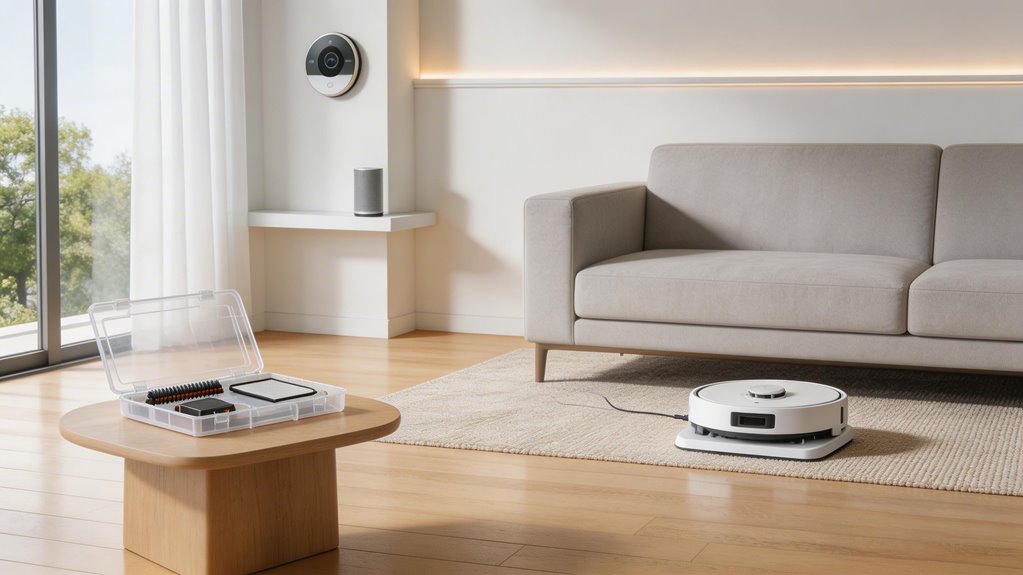
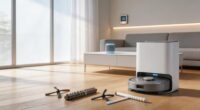
Your maintenance schedule depends on what your vacuum actually encounters. High-traffic kitchens and pet homes need daily dustbin emptying and weekly brush cleaning, while quiet hardwood floors get by with monthly sensor wipes. Most households fall somewhere between—empty the bin after heavy use, tap filters weekly, and clean charging contacts regularly to prevent dust buildup that kills suction and navigation. The specifics shift based on your floor type, shedding patterns, and traffic, but skipping these tasks tanks performance faster than you’d expect.
Key Points
- Empty dustbin daily for pet owners and high-traffic homes; weekly for moderate use to maintain suction effectiveness.
- Clean main and side brushes weekly, or daily during peak shedding seasons for long-haired pets.
- Replace HEPA filters every 2–4 months with standard use; shorten to 2–3 months in dusty pet homes.
- Wipe sensors and charging contacts monthly to prevent navigation issues and ensure reliable charging functionality.
- Check wheels and battery daily as part of routine inspection to prevent wear and performance drops.
How Use Case and Floor Type Determine Robot Vacuum Cleaning Frequency
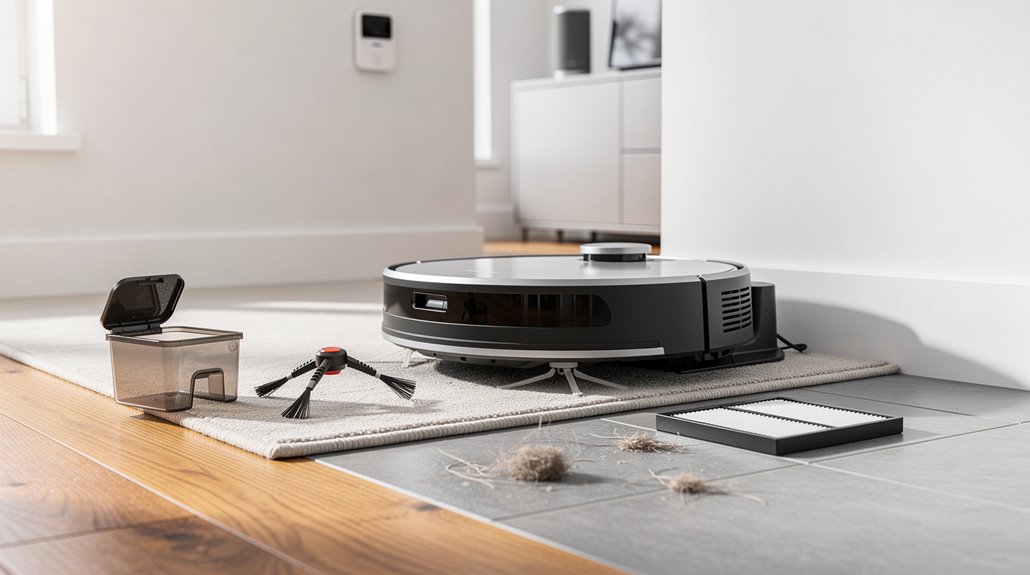
How often you actually need to run your robot vacuum depends on two main things: where the vacuum’s working and what’s on your floors.
Robot vacuum frequency depends on two critical factors: your home’s location and floor conditions.
High-traffic kitchens need runs two to three times weekly because of crumbs.
Playrooms demand three to four times weekly.
Hardwood floors in quiet homes get by with every other day. Robot vacuums with HEPA filters effectively trap fine particles and allergens that accumulate on these smooth surfaces.
Your robot vacuum maintenance schedule hinges on these specifics, not generic recommendations.
How Often to Clean Robot Vacuum Brush Rolls by Household Type
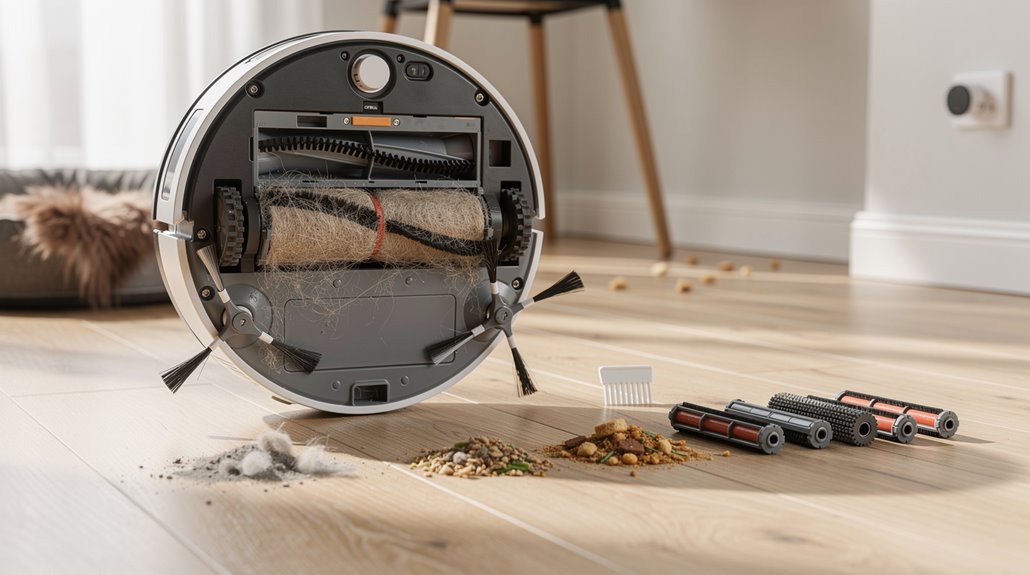
Your cleaning schedule shifts dramatically depending on what’s actually in your home.
If you’ve got long-haired shedding pets, you’re looking at weekly brush cleaning minimum—sometimes daily during peak shedding seasons—because pet hair wraps around the brush roll and kills suction fast. To maintain optimal performance, clean main roller brush weekly and remove hair, string, and debris using the included cleaning brush. Consistent maintenance routines also reduce the need for costly motor repairs and replacements that result from accumulated debris strain.
On the flip side, a hard-floor-only single-occupant household can get away with bi-weekly or even monthly brush cleaning since you’re dealing with minimal debris and no hair accumulation.
Cleaning intervals for households with long-haired shedding pets
Pet hair doesn’t care about your cleaning schedule—it shows up on its own timeline, which means households with long-haired shedding pets need a different maintenance approach than most robot vacuum owners.
Your robot vacuum pet hair maintenance demands intensity:
- Empty the dustbin daily since pet hair fills it fast
- Brush your pets daily to reduce loose shedding
- Clean and detangle vacuum brushes weekly
- Use turbo suction modes on carpets
- Replace filters every six months minimum
- Ensure your robot vacuum has HEPA filter capability to capture allergens and pet dander that accumulate during frequent cleaning cycles.
- Consider models with anti-tangle designs to reduce the weekly maintenance burden of hair removal from brush axles and side brushes.
Cleaning intervals for hard-floor-only single-occupant households
Single-occupant households with hard floors only sit at the opposite end of the maintenance spectrum from pet owners, and that changes almost everything about how often you’ll actually need to clean your robot vacuum’s brush rolls.
You can stretch robot vacuum weekly maintenance to bi-weekly inspections instead. Less hair tangles around rollers on hard floors, so you’ll replace them every 6 to 12 months depending on use. To maintain optimal performance, regularly clean sensors and brushes to preserve navigation accuracy and edge cleaning capability. Keeping your charging dock in a cool, dry location away from direct sunlight will also help maintain battery longevity during periods of regular use.
How Often to Clean Robot Vacuum Filters by Filter Type
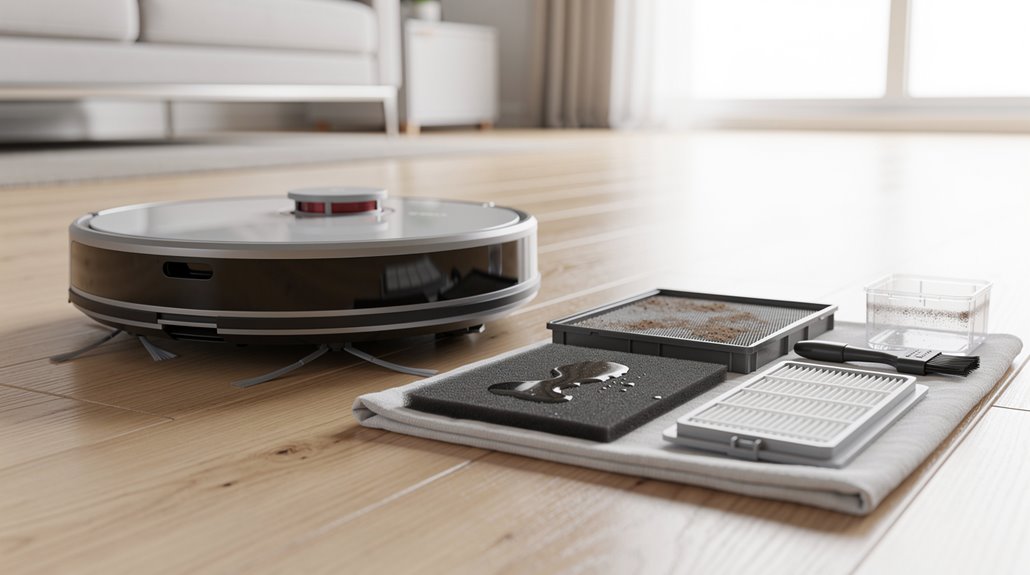
Your robot vacuum’s filter type determines how often you need to maintain it, and that schedule matters more than you might think.
HEPA filters demand attention every three to six months under normal conditions, though heavy use or pet hair bumps that up significantly, and you’ll need to replace them if they’re damaged since washing won’t fix structural wear. Never use water or detergent when cleaning HEPA filters, as HEPA filters cannot be washed without compromising their integrity.
Standard foam filters need cleaning every one to three months depending on your home’s dust load, and while you can rinse them with water and mild soap, they’ve to dry completely before you reinstall them or you’ll trap moisture in the motor. For optimal performance and to prevent clogging issues, replace the filter every 6 months to maintain the effectiveness of your robotic vacuum’s cleaning system.
HEPA filter cleaning and replacement intervals
HEPA filters in robot vacuums need regular attention—they’re not a set-it-and-forget-it component.
You’ll maintain peak suction by establishing a robot vacuum filter cleaning routine:
- Tap out dust weekly or after every fifth cleaning cycle
- Replace filters every 2–4 months with standard use
- Shorten intervals to every 2–3 months in dusty homes or with pets
- Use compressed air or a brush to dislodge trapped particles
- Check visibly clogged filters immediately—performance drops fast
Most robot vacuum filters use small pleated cartridge designs that are not designed for washing, making replacement the recommended maintenance approach for preserving filtration performance. A clean filter] supports optimal cleaning results and eliminates bad odours while preventing system clogging.
Standard foam filter cleaning frequency
Foam filters need regular rinsing to keep your robot vacuum working well, and the cleaning schedule depends partly on your home’s conditions.
Most manufacturers recommend cleaning every 1-3 months with routine rinsing between cycles. Pet owners should increase robot vacuum foam filter cleaning frequency to every few weeks. Washable foam filters degrade after repeated rinses and will eventually need replacement despite regular cleaning.
Rinse with mild soap, then let it dry completely before reinstalling. Air dry completely to prevent damage before using your vacuum again.
Neglecting this maintenance reduces suction and strains your motor.
How Often to Clean Robot Vacuum Cliff Sensors and LiDAR Windows
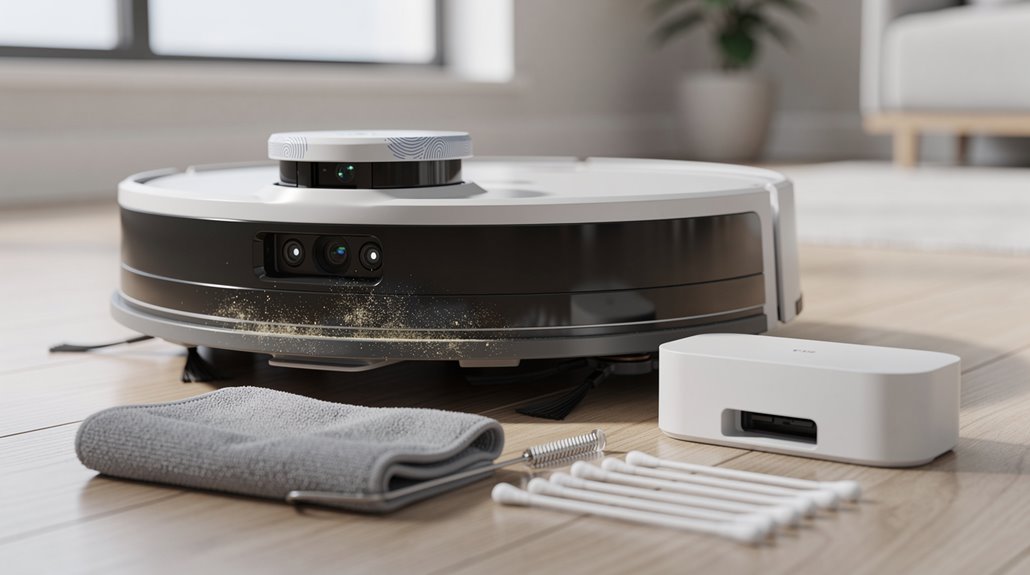
Cliff sensors and LiDAR windows are among the parts that actually need regular attention, since dust and debris build up on them faster than you’d expect.
Cliff sensors and LiDAR windows accumulate dust and debris surprisingly fast and require regular cleaning attention.
Your cliff sensor cleaning robot vacuum routine depends on your home:
- Weekly cleaning for daily vacuuming or high-traffic homes
- Monthly maintenance for smaller, cleaner spaces
- Bi-weekly intervals for moderate use patterns
- Compressed air as your first cleaning method
- Dry microfiber cloth for gentle wiping only
For cliff sensors specifically, wipe the sensor windows with a dry microfiber cloth and use a small brush for any trapped debris that compressed air cannot remove. Avoiding harsh chemicals or alcohol on these delicate optical components is essential, as harsh chemicals can degrade sensors or leave residue that interferes with their accuracy.
How Often to Clean Robot Vacuum Dock Contacts and Charging Pins
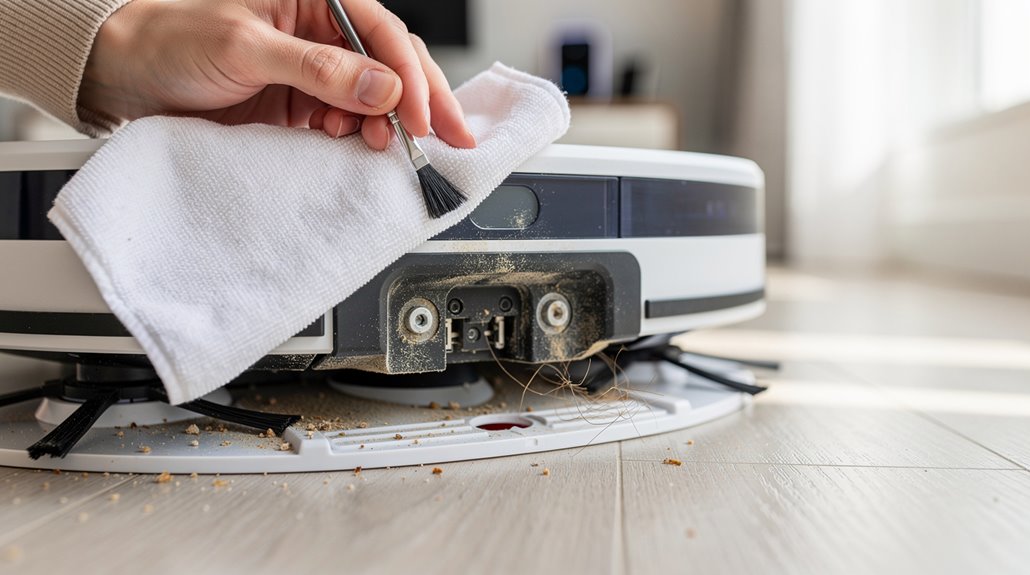
Your robot vacuum’s dock contacts and charging pins deserve the same attention you’d give a regular appliance’s power cord—which is to say, more than you probably think about it now.
Clean them monthly or whenever you notice charging issues.
Use a dry cloth to wipe both robot and dock contacts.
Dust blocks power flow, so don’t skip this.
Check alignment too. For optimal results, clean charging contacts weekly to prevent dust buildup that can degrade your vacuum’s charging reliability over time. If you notice your robot vacuum isn’t charging despite proper alignment, unplug the dock first before using a damp cloth for more thorough cleaning of stubborn grime.
A Complete Robot Vacuum Maintenance Schedule by Task Frequency
Keeping up with robot vacuum maintenance isn’t glamorous, but it’s the difference between a machine that runs smoothly for years and one that starts dying on you halfway through its lifespan.
You’ll want to tackle these tasks regularly:
- Empty the dustbin daily or after every use
- Clean main and side brushes weekly for robot vacuum brush cleaning frequency
- Tap filters weekly, deep clean every two weeks
- Wipe sensors monthly to prevent navigation issues
- Check wheels and charge battery daily
- Regular maintenance of your robot vacuum is recommended to prevent wear and prolong the lifespan of your machine. A full dustbin significantly reduces cleaning effectiveness and can cause your robot to stop mid-cycle, so prioritize frequent emptying to maintain optimal performance.
Frequently Asked Questions
Can I Wash Robot Vacuum Brushes and Filters Instead of Replacing Them?
You can wash washable filters and brushes instead of replacing them. Rinse them under cold water, air-dry completely for 24-48 hours, then reinstall. However, non-washable filters require replacement every 4-6 months.
What Happens if I Don’t Clean My Robot Vacuum Regularly?
You’ll experience clogged brushes, reduced suction power, sensor failures, and potential fire hazards from motor overheating. Your vacuum won’t clean effectively, and you’ll spread bacteria and pet waste throughout your home.
How Do I Know if My Robot Vacuum Needs Cleaning?
You’ll notice your robot vacuum needs cleaning when its dustbin fills rapidly, suction weakens, or you hear grinding noises—pet owners report 40% faster debris accumulation. Check brushes for tangled hair and filters for dust buildup.
Should I Clean My Robot Vacuum Before or After Each Use?
You should clean your robot vacuum after each use. This timing prevents debris buildup, maintains suction power, and guarantees peak performance. Post-use cleaning removes hair tangles, clears sensors, and keeps your vacuum operating efficiently.
What Cleaning Tools Do I Need for Robot Vacuum Maintenance?
You’ll need microfiber cloths, small brushes, and toothbrushes—basically, you’re becoming your vacuum’s personal groomer. Grab damp cloths, dry rags, replacement filters, and the included cleaning tool. You’re now a maintenance expert whether you like it or not.
Conclusion
You’ve now got a maintenance blueprint that actually fits your life. Studies show that homes with pets need brush cleaning every two weeks versus monthly for pet-free spaces—a difference that matters for suction performance. Stick to your schedule based on your floor type and household. Your vacuum’ll last longer, cost less to repair, and keep working the way you bought it to work.