
Rubber extractors win on long pet hair and maintenance—they rarely tangle, so you’re cleaning every week instead of twice weekly. Bristle brushes dig deeper into thick carpet fibers and hit around 90% pickup on low-pile surfaces. The catch: rubber struggles on high-pile carpet, dropping to 50% effectiveness. Your floor type matters more than the brush itself. Pick rubber if you’ve got mixed surfaces and shedding pets; go bristles if your home is mostly low-pile. The specifics shift depending on what your setup actually looks like.
Key Points
- Rubber brushes excel at long pet hair by releasing strands cleanly without tangling, reducing maintenance needs significantly.
- Bristle brushes achieve superior pickup on low-pile carpet (90%) but underperform on high-pile surfaces compared to rubber.
- Rubber extractors require weekly cleaning versus bristle brushes needing twice-weekly maintenance due to frequent hair wrapping.
- Bristle brushes provide more aggressive debris dislodging on low-pile carpet but trap hair in gaps near end caps.
- Twin rubber brushroll configurations deliver improved pet hair pickup over single brushroll designs with minimal upkeep burden.
How Rubber Extractor Brushes Work in Robot Vacuums
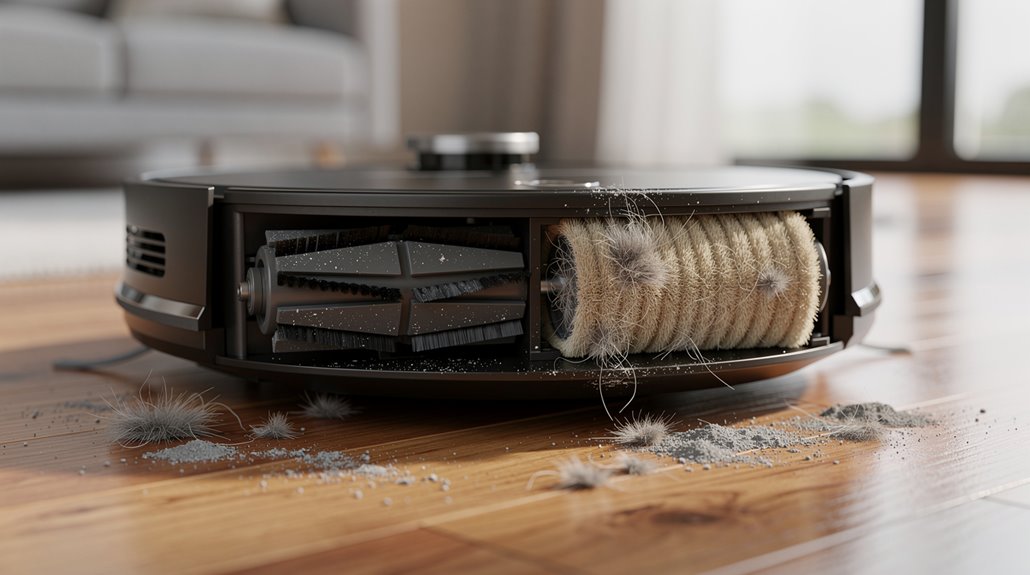
Rubber extractor brushes work by using their flexible geometry to grip carpet fibers at multiple angles as the brush rotates, which lets them pull embedded dirt and debris out more effectively than bristles that can only push from one direction.
As regards pet hair, you’re dealing with a real advantage: rubber bristles allow hair to cut into the surface during cleaning and then release cleanly as the brush spins, whereas traditional bristle rolls tend to wrap hair around the entire barrel, creating those frustrating tangles.
The anti-tangle design means you’re spending less time on maintenance and fewer error codes popping up from blockages. Rubber extractors work in harmony with the suction mechanism to draw loosened hair and debris into the dustbin more efficiently than bristle brushes alone. Many robot vacuum manufacturers, including those in the Alibaba Group ecosystem, have developed proprietary rubber brush technologies to improve cleaning performance and reduce maintenance requirements.
How rubber fin geometry pulls debris from carpet fibres
When a rubber brush roller spins across your carpet, what you’re actually watching is a carefully engineered geometry at work—one that’s fundamentally different from how bristles operate. The triangular fin design creates shear force by bending against individual carpet strands. As fins flex and conform, they scrape debris trapped between fibers. Angled geometry channels particles upward toward suction. Your rubber brush robot vacuum maintains consistent contact across uneven pile while minimizing fiber compression—something bristles can’t replicate. Many of these replacement components, such as Anti-tangle Dual Rubber Brushes, are available as aftermarket accessories to restore your vacuum’s cleaning performance.
| Fin Feature | Function | Carpet Impact |
|---|---|---|
| Triangular profile | Maximizes edge penetration | Reaches dense fibers |
| Helical spacing | Distributes pulling force | Reduces shear wear |
| 5-10mm height | Balances penetration and resistance | Adapts to pile depth |
| Low durometer rubber | Enables flexing without snagging | Preserves loft structure |
| Continuous tension | Prevents debris drop-back | Sustains extraction cycle |
Why rubber brushes accumulate less long pet hair than bristle rolls
In between those bristles on a traditional brush roll, your pet’s hair finds the perfect place to wrap and tangle.
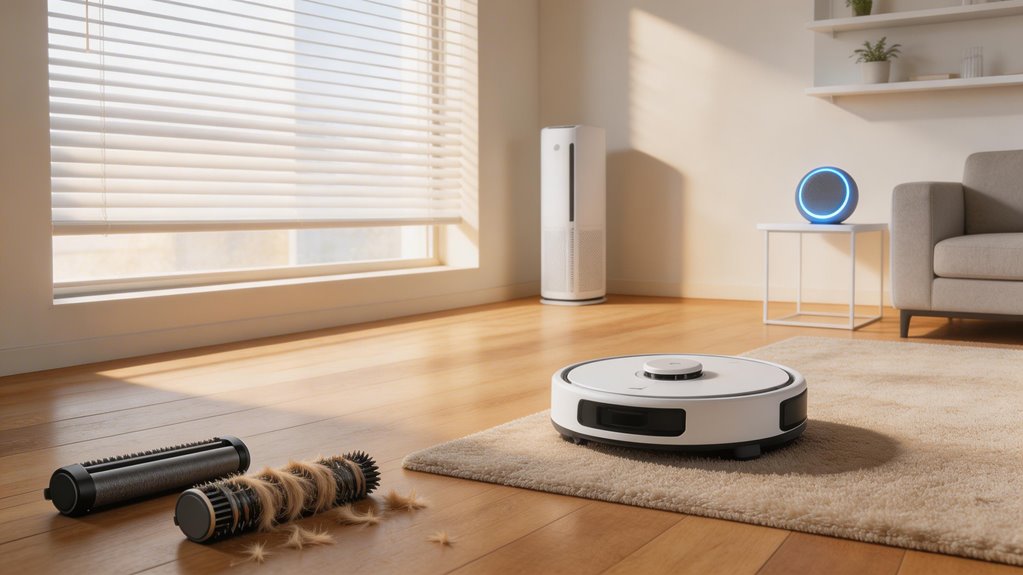
A rubber extractor brush lacks those gaps entirely. The smooth, continuous rubber surface sheds hair easily instead of trapping it. Long strands slide off without adhesion, so you’re cleaning your vacuum far less often than bristle users do. The beater bar or rubber brush underneath works with suction to loosen and lift debris from floors while maintaining this tangle-free advantage.
How Bristle Brush Rolls Work and Where They Perform Well
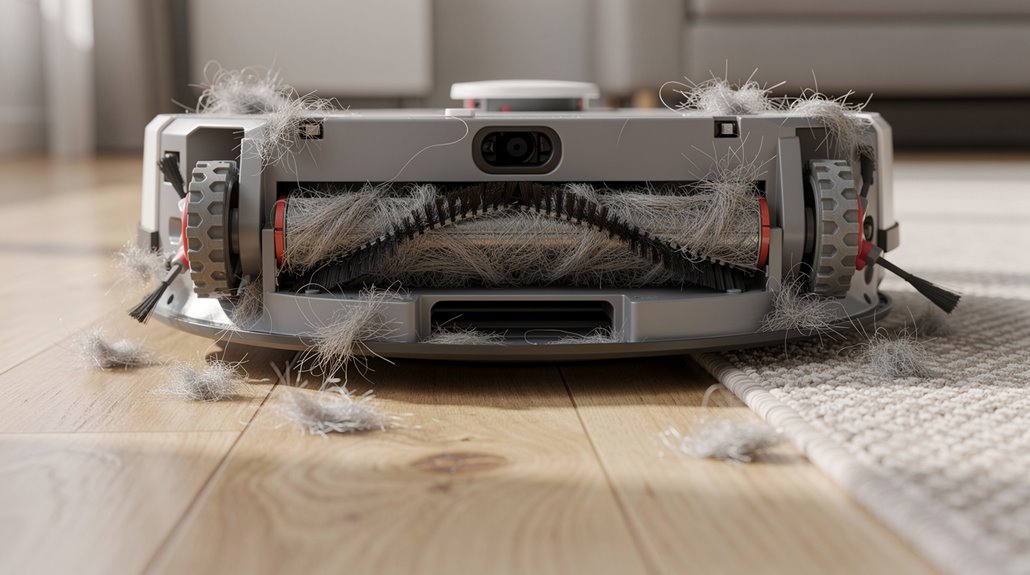
Bristle brushes work by using stiff fibers that agitate carpet pile directly, pushing debris toward the suction path more aggressively than rubber can manage.
You’ll find they perform exceptionally well on hard floors—expect around 97% pickup—but on carpet they average 77% because dense bristle pores miss sweeps in the middle sections.
The trade-off is real: those same stiff bristles that dig into carpet also accumulate hair wraps over time, especially on the axles, which means you’re looking at weekly maintenance to keep them from losing effectiveness. However, rubber brushes generally perform better than bristle designs for anti-tangling purposes. In contrast, tangle-free extractors glide through carpet fibers and guide hair directly into the suction path rather than trapping it around bristles.
How stiff bristles agitate carpet pile for deeper debris dislodging
Stiff bristles dig into carpet pile differently than soft ones do, and that difference matters when you’re trying to pull embedded dirt from thick fibers.
Your bristle brush robot vacuum’s stiff design scrubs between bristle rows, lifting particles that’d otherwise stay trapped. This agitation targets pet hair and threads woven deep within carpet, making the suction more effective on medium to high-pile surfaces. However, stiff bristles are prone to tangled hair and thread buildup, which can slow or stop the brush from spinning, reducing both suction and cleaning effectiveness over time. Regular cleaning of your bristle brush every two weeks restores the brush’s suction power and performance by removing obstructions that impede airflow and motor function.
Where bristle brushes accumulate hair wraps over time
Hair doesn’t just sit on bristle brushes—it wraps around them like thread on a spool, and that’s where your maintenance headaches start.
The densest accumulation happens near the end caps, where bristles spin tightest. Hidden hair rings form around bearings inside those plastic casings. When hair and moisture combine in these tight spaces, bacteria and mold growth can develop, creating foul odors that spread throughout your home.
You won’t see the problem until rotation slows. Strong suction and static electricity make the wrapped hair even harder to remove once it binds to the bristles.
Regular manual cleaning with scissors prevents this hair wrap from jamming your robot vacuum brush completely.
How Rubber and Bristle Brushes Compare on Pet Hair Performance
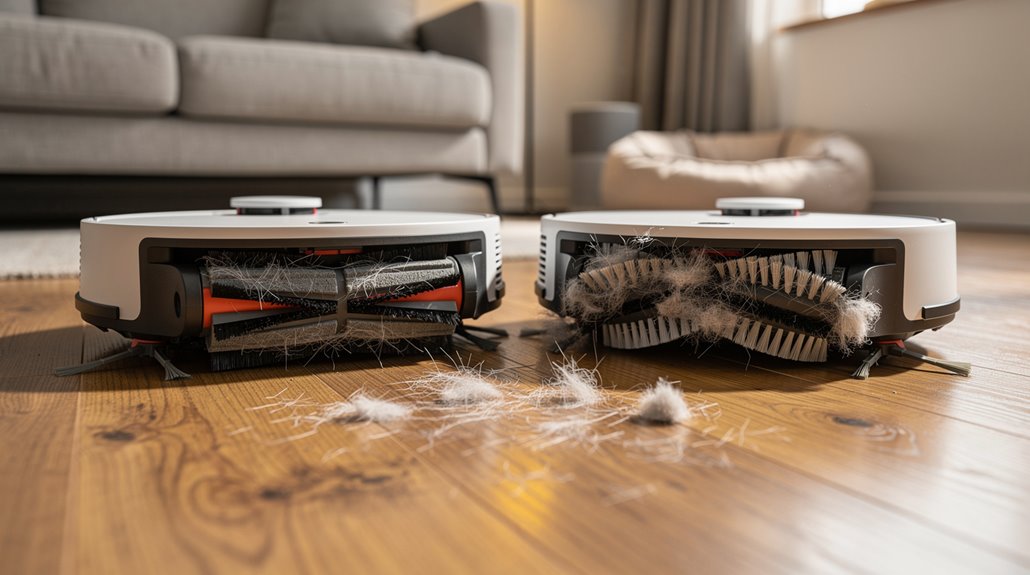
When you’re dealing with long pet hair, rubber brushes stay cleaner because hair slides off instead of wrapping around the roller—bristles tend to snag those longer strands and hold them tight.
On short hair, both types work, though bristles give you a more detailed clean on low-pile carpet while rubber handles high-pile better and requires way less maintenance afterward.
The real difference shows up on your carpet type: if you’ve got a mix of surfaces, rubber’s your safer bet, but if your home’s mostly low-pile with short-haired pets, bristles still get the job done without the extra fuss. Models like the Roomba 880 use rubber extractors with a ribbed, counter-rotating design specifically engineered to reduce maintenance compared to bristled brushes. For pet owners with self-emptying models, you can expect 30–60 days between empties rather than emptying the dustbin every 1–2 cleaning sessions.
Hair wrap rate comparison on long vs short pet hair types
Because pet hair behaves differently depending on length, you’ll notice that rubber and bristle brushes handle tangling in distinctly opposite ways.
Rubber extractors rarely wrap long hair, while bristle brushes tangle frequently and require constant maintenance.
Short hair tangles minimally on both types, though rubber still wins on ease of cleaning.
Your robot vacuum pet hair brush choice depends on what your pets shed most. Some bristle designs like the Bissell Pet Hair Eraser incorporate recessed bristles to reduce hair accumulation compared to standard bristle configurations.
How each brush type performs on low-pile vs high-pile carpet
The carpet type under your robot vacuum matters more than most people realize, and it’s where rubber and bristle brushes start showing their real differences.
On low-pile carpet, bristle brushes hit 90% hair pickup versus rubber’s 50%. High-pile flips the script—bristle reaches 96-97% efficiency while rubber struggles with deep penetration.
Rubber wins on tangle resistance, though bristle designs now minimize wrap through recessed bristles. Self-cleaning and tangle-free brush roll designs have become industry standards that reduce maintenance needs while maintaining strong pet hair removal across both carpet types.
How Brush Type Affects Robot Vacuum Maintenance Frequency
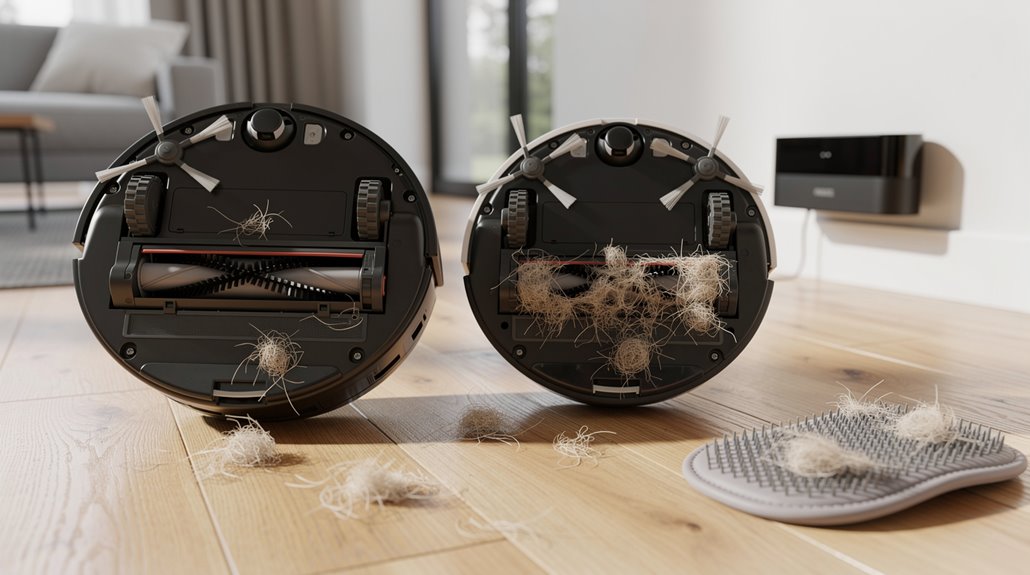
Your brush choice matters more than you’d think regarding how often you’ll actually maintain your robot vacuum.
Rubber brush roll robot vacuums resist hair tangling, so you’ll clean them weekly instead of twice weekly.
Bristle brushes snag pet hair constantly, demanding more frequent maintenance. Over time, accumulated debris in bristle brushes can trap odors and bacteria, which compromises your home’s hygiene beyond just maintenance frequency.
In pet homes, rubber brushes cut your upkeep noticeably. For optimal performance, clean your filter every 1–2 months or after each cleaning to maintain suction power regardless of brush type.
The trade-off: rubber brushes perform worse on high-pile carpet.
Which Brush Design to Choose Based on Floor Type and Pet Hair Length
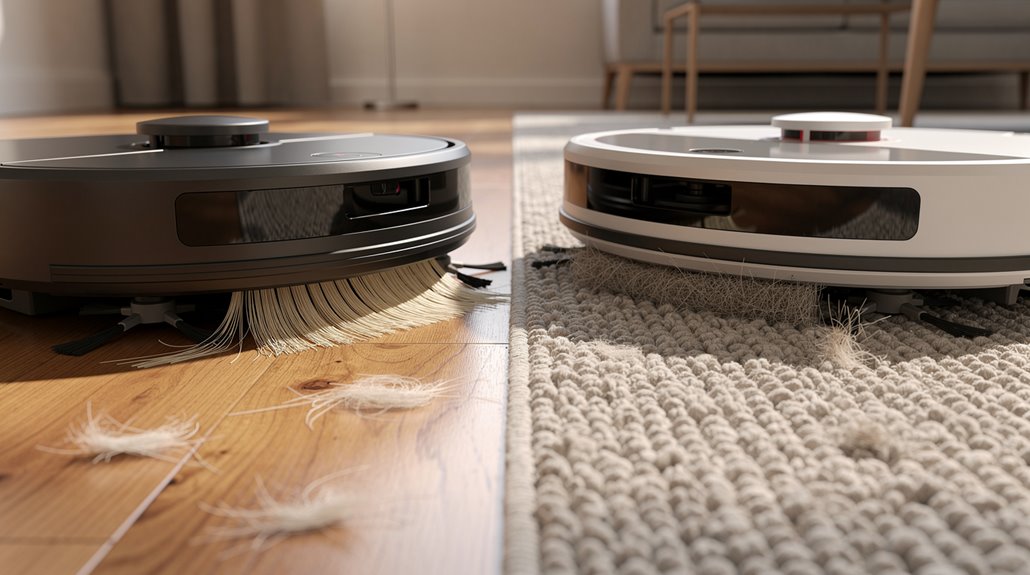
When you’re picking between rubber and bristle brushes, your home’s actual floor type and your pet’s hair situation matter way more than marketing claims.
On hard floors, rubber dominates—it glides smoothly without scattering short hairs.
For long pet hair anywhere, rubber prevents tangling. Regular maintenance of the brush roll is essential for optimal operation, as hair tangles on brush rollers reduce vacuum effectiveness and require frequent attention. Models like the Roborock S8 MaxV Ultra use twin rubber brushrolls to deliver significantly improved pet hair pickup compared to single brushroll designs.
Carpets favor rubber too, especially high-pile.
Your robot vacuum brush comparison hinges on this: what covers your floors and what your pet sheds.
Frequently Asked Questions
Can I Replace a Rubber Brush With Bristles on My Existing Robot Vacuum?
You can physically replace your rubber brush with bristles, but you’ll likely face compatibility issues. Length mismatches, improper fit on roller rods, and reduced cleaning effectiveness may occur. Verify your specific vacuum model’s compatibility before attempting conversion.
Do Rubber Brushes Work Better on Hardwood Floors Than Bristle Brushes?
Would you risk scratching your cherished hardwood with harsh rubber bristles? No—bristle brushes outperform rubber ones on hardwood floors. You’ll protect your wood from damage while effectively removing dust and fine particles with gentler, safer cleaning action.
How Often Should I Clean Rubber Versus Bristle Brushes for Optimal Performance?
You should clean both rubber and bristle brushes weekly, but increase to twice weekly if you’ve got pets. You’ll need monthly deep cleaning for rubber brushes and monthly inspections for bristle brushes to maintain peak performance.
Are Rubber Brushes Quieter Than Traditional Bristle Brush Robot Vacuums?
Your rubber brush vacuum operates at a whisper compared to bristle brushes’ ear-splitting roar. You’ll enjoy significantly quieter cleaning sessions since rubber’s flexibility reduces vibration and noise dramatically compared to traditional bristles.
What’s the Average Lifespan of Rubber Versus Bristle Vacuum Brush Rolls?
You’ll find that rubber brush rolls typically last 6–18 months, while bristle brushes endure 6–12 months with regular use. Premium bristle models like Miele extend to 2–4 years, outperforming standard options significantly.
Conclusion
You’ll want rubber if you’ve got long-haired pets and hardwood floors—it won’t tangle like bristles do. Think of it like combing versus brushing: one slides through, the other catches. Bristles work better on carpet and shorter fur, but you’re cleaning them weekly. Your real choice comes down to maintenance tolerance and your home’s flooring. Pick whichever you’ll actually commit to maintaining.