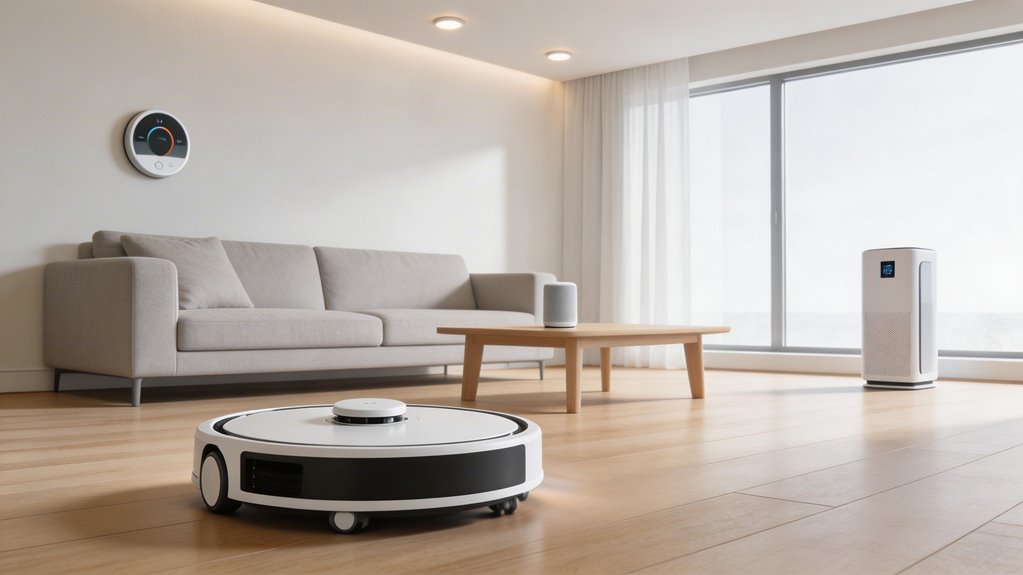
Pa measures the negative pressure your robot vacuum creates to suck debris up from floors—higher Pa means stronger pull. But here’s the thing: the spec sheet Pa number comes from sealed lab tests with clean filters and a full battery, so it’s often way higher than what actually reaches your floor at home. Real-world suction drops because of filter resistance, air leaks, and brush design. You’ll find more detailed breakdowns of what Pa you actually need for your specific floors further down.
Key Points
- Pa (Pascal) measures negative pressure strength that pulls debris into a robot vacuum’s inlet system.
- Higher Pa indicates stronger suction force, but doesn’t guarantee cleaning performance without proper airflow and sealing.
- Lab Pa ratings often exceed real-world nozzle performance due to filter resistance and air path losses.
- Effective suction requirements vary by floor type: 2,000 Pa for hardwood, 3,000–5,000 Pa for low-pile carpet.
- Filter maintenance and air path design directly impact sustained suction; clogged filters reduce effective Pa by 20–50%.
What Pascal Measurement Means in Robot Vacuum Suction Ratings
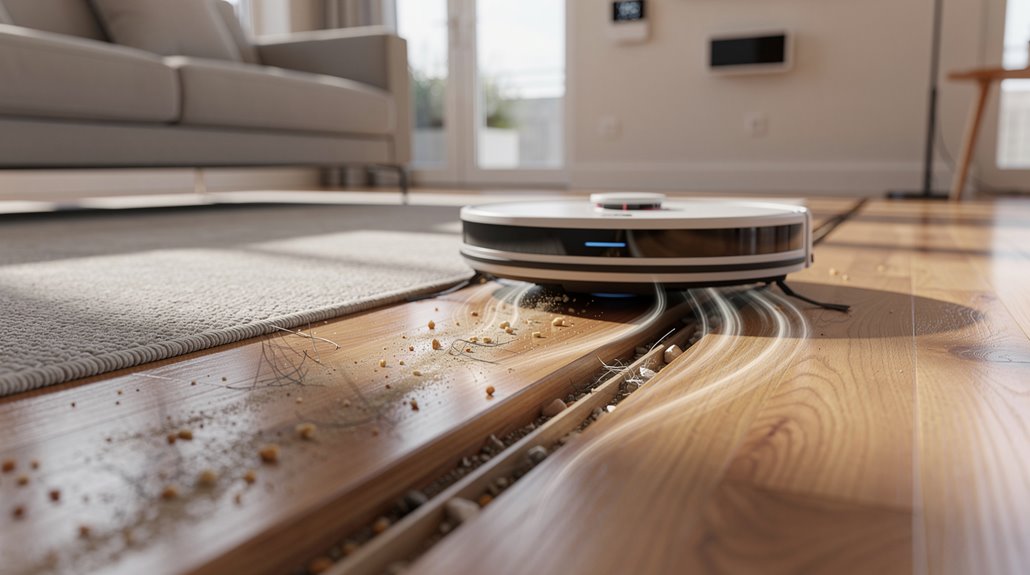
Pascal—or Pa—shows up on every robot vacuum spec sheet, and it measures the negative pressure your vacuum creates at the inlet to pull debris off your floor. Higher Pa means stronger suction force.
A pascal robot vacuum with 3,000 Pa handles typical household dirt well. Think of Pa as measuring how hard your vacuum pulls, not how much air it moves through. However, Pa alone doesn’t guarantee cleaning performance, since effective suction requires combining pressure with proper airflow design, motor efficiency, and sealing to achieve real-world results. For deeper cleaning and carpets, 5,000 Pa or more is recommended to handle embedded fibers and stubborn debris more effectively.
How Pa Suction Is Measured in Robot Vacuum Lab Testing Conditions
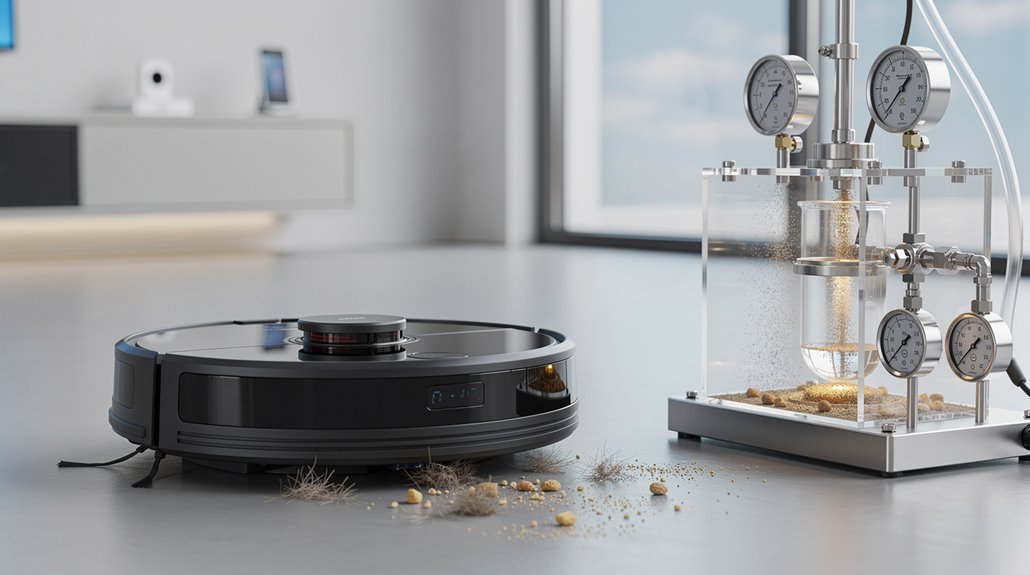
You’re looking at numbers pulled from sealed chambers with perfect conditions—full battery, clean filters, no real-world mess—which means that 20,000 Pa rating doesn’t translate directly to what you’ll actually see on your living room floor.
The air path from the motor to the brush head matters just as much as raw pressure; a poorly designed channel or weak sealing loses suction long before debris even reaches the collection bin. A well-engineered lower-Pa model with optimized airflow design and sealed components can outperform a poorly constructed higher-Pa vacuum in real-world cleaning scenarios. For reference, most robot vacuums deliver significantly lower suction than cordless models due to their compact motor size and battery constraints.
Why lab Pa figures diverge from real-world suction performance
When a manufacturer reports that their robot vacuum pulls 20,000 Pa in the lab, they’re measuring something real—but it’s not what happens when the machine actually cleans your floor.
Real-world robot vacuum suction measurement drops significantly due to airflow resistance, brush friction, and debris blocking the path. Clogged filters and blockages are primary causes of this performance degradation over time. The lab testing conditions use clean, controlled environments that fail to account for typical household dust accumulation and variable floor surfaces.
That sealed lab number ignores what actually matters: moving air volume and sustained performance across carpet and hard floors.
What air path design does to effective suction at the brush head
The air path inside your robot vacuum is where the gap between lab numbers and floor performance actually happens.
Your air path design directs that sealed Pa pressure straight to the brush head.
But real carpets leak vacuum everywhere.
Robot constraints mean you’ll actually get 3–10 kPa at the brush, not the 20,000 Pa advertised.
Filters and dust bag maintenance affect sustained suction and airflow throughout the entire air path system.
How Much Pa Suction You Actually Need for Different Floor Types
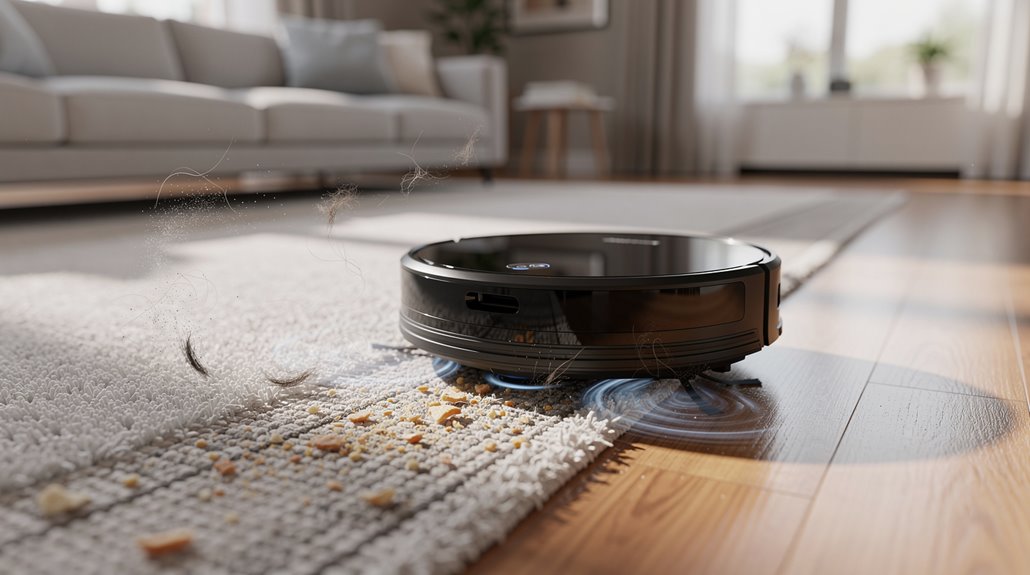
You’ll want different suction levels depending on what’s actually on your floors—sealed hardwood and tile need far less pressure than carpet, while low-pile and high-pile each have their own sweet spot.
Hardwood floors do fine with 2,000 Pa since smooth surfaces don’t trap debris, but low-pile carpet demands at least 2,500 Pa to pull embedded dust, and high-pile jumps to 6,000–8,000 Pa to reach fiber depths where pet hair and crumbs hide. Keep in mind that clogged filters and air leaks can significantly reduce your vacuum’s effective suction performance regardless of its Pa rating. The most important factor is that proper sealing prevents loss of suction effectiveness, ensuring the pressure you have actually reaches the floor and removes dirt rather than wasting power.
Matching your Pa rating to your floor type means you’re not overpaying for power you won’t use or undershooting and ending up with a robot that leaves stuff behind.
Pa requirements for low-pile carpet vs high-pile carpet
If you’ve got low-pile carpet, you don’t need anywhere near as much suction as you’d think—3,000 to 5,000Pa handles it without strain, and even entry-level models sitting at 2,000 to 5,500Pa pull debris effectively from those tighter fibers.
| Carpet Type | Pa Range | Key Feature | Model Example | Pickup Rate |
|---|---|---|---|---|
| Low-pile | 3,000-5,500Pa | Automatic boost | P10 Pro Ultra | 81% |
| High-pile | 18,000-27,000Pa | Anti-tangle brush | Z60 Ultra Roller | Deep clean |
| Mixed floors | 3,500-5,000Pa | Standard suction | Entry-level | Effective |
| Shag carpet | 8,000Pa+ | Stiff bristles | V50 Ultra | 88% |
| Pet homes | 18,000-27,000Pa | Sealed system | P50 Pro Ultra | High debris |
High-pile’s different. You’re looking at 8,000Pa minimum, though 18,000 to 27,000Pa handles thick carpets and pet hair without choking. For optimal results on high-pile carpets, models with carpet detection and auto-adjust features increase suction automatically when transitioning from hard floors to carpet. Robot vacuum suction power matters here because airflow alone won’t cut it—you need brush roll performance too. Remember that effective airflow coordination between suction and brush design is essential for lifting dirt from dense fibers rather than relying on Pa numbers alone.
Pa requirements for sealed hardwood and tile floors
Sealed hardwood and tile floors don’t need the same suction power that carpets demand, but they’re also not forgiving about the wrong approach.
You’ll want a pa rating between 1800–2500Pa for tile grout lines and 1600–2000Pa for sealed hardwood. This range lifts debris without scratching finishes.
A 2000Pa robot vacuum handles both surfaces reliably without overkill. Models like the Roborock S5 with 2000Pa suction power are capable of picking up large debris while maintaining the integrity of your hardwood floors.
Why Identical Pa Ratings Produce Different Cleaning Results Across Models
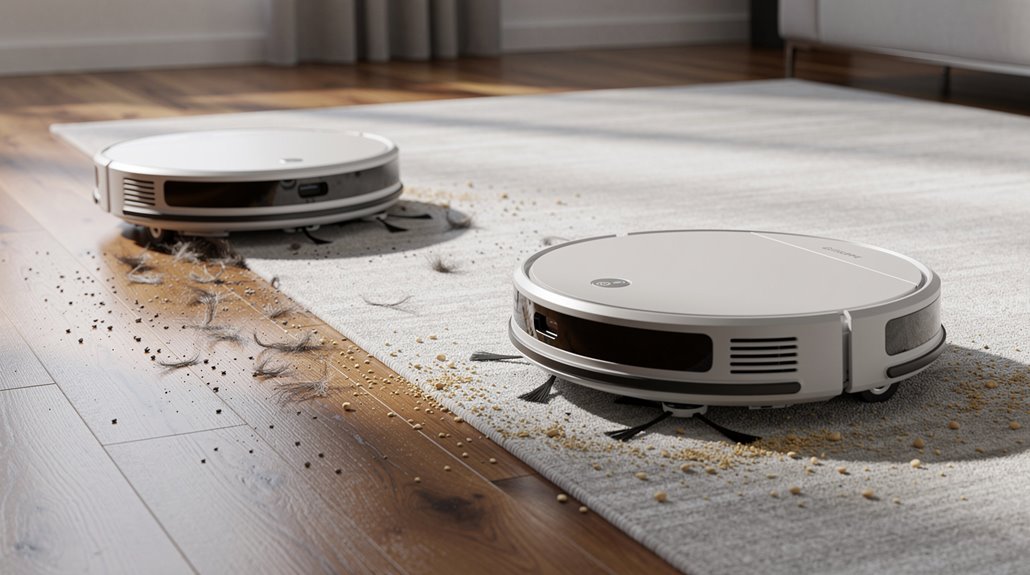
You’ll find that two robot vacuums with identical Pa ratings can clean completely differently because of how their brush roll geometry channels debris toward the intake and how much resistance their filters create between the motor and the nozzle.
A densely packed brush roll might agitate pet hair more effectively than a sparser design, even though both models pull the same pressure, while a clogged or poorly engineered filter can choke suction so badly that you’re actually working with less effective Pa at the point where it matters—right at your floor.
That gap between the spec sheet and real performance is where brush design and filter resistance do most of the heavy lifting. Remember that airflow volume also plays a critical role in moving debris out of your home, since high pressure alone won’t effectively remove dirt if the air moving through the system isn’t sufficient to carry particles to the dustbin.
How brush roll geometry affects how suction translates to debris pickup
When two robot vacuums carry the same Pa rating, you’d think they’d clean about the same. They don’t. Brush roll suction performance depends heavily on geometry. A tapered roller design reduces hair wrapping while maintaining contact. Extractor-style brushes capture debris at both ends. These shapes determine whether suction actually reaches loosened dirt or wastes power on gaps. Cleaner brushes maintain stronger contact and agitation, improving debris loosening and consistent pickup across different floor types. When extractors jam from longer hairs wrapping around the middle, removing and cutting the stuck debris restores operation and prevents performance degradation.
| Brush Design | Hair Wrapping | Debris Capture | Contact Quality |
|---|---|---|---|
| Tapered Roller | Minimal | Both ends | Consistent |
| Extractor-style | Low | Optimized | Strong |
| Standard bristle | High | Center only | Uneven |
| Dual roller | Reduced | Dual points | Reliable |
| Fixed design | Moderate | Limited | Degrades |
How filter resistance reduces effective Pa at the intake nozzle
Here’s where the math gets messy. Your robot vacuum’s filter resistance quietly eats into that Pa number the manufacturer advertises.
A HEPA filter alone drops effective suction 100-500 Pa. Add a clogged filter, and you’re losing another 20-50%. Two identical models with the same motor Pa deliver wildly different nozzle suction because robot vacuum filter resistance varies by design. Weak suction is usually caused by blockages in the air path, which compounds the natural pressure loss from filtration systems. Regular filter maintenance—cleaning or replacing filters per manufacturer instructions and ensuring washable filters are fully dry—directly preserves the effective suction pressure at your vacuum’s intake nozzle.
What Pa Range to Look For in Robot Vacuums at Each Price Tier
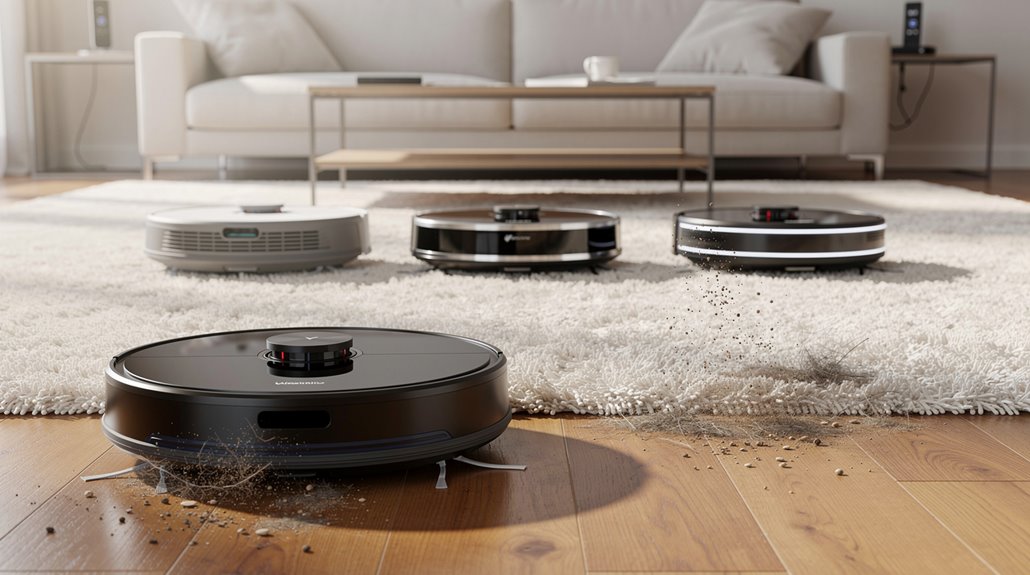
Because suction power directly affects what your robot vacuum can actually clean, the Pa range you should target depends almost entirely on what you’re spending.
| Price Tier | Suction Power |
|---|---|
| Budget ($100–$300) | 1,000–2,500 Pa |
| Mid-Range ($300–$600) | 2,500–6,000 Pa |
| Upper Mid-Range ($600–$1,000) | 6,000–8,000 Pa |
| Premium ($1,000+) | 8,000–22,000 Pa |
At budget levels, you’re handling light dust on hard floors. Mid-range models tackle mixed flooring and pets reasonably well. Higher tiers give you deep carpet cleaning and embedded debris removal for demanding homes.
Frequently Asked Questions
How Does Pa Suction Compare to Other Vacuum Suction Measurement Units Like AW?
You’ll find Pa measures pressure alone in robot vacuums, while AW combines airflow and pressure for comprehensive power assessment. Pa yields larger numbers, causing confusion—they’re not directly comparable across vacuum types.
Can a Robot Vacuum’s Pa Rating Decrease Over Time With Dust Filter Clogging?
No, your vacuum’s Pa rating doesn’t decrease—but as they say, “you can’t get blood from a stone.” Dust-clogged filters restrict airflow, so you’ll experience diminished suction performance despite the Pa measurement staying constant.
Do All Robot Vacuums With the Same Pa Rating Have Identical Motor Power?
No, you can’t assume identical motor power from matching Pa ratings. You’re dealing with varying motor efficiency, different testing methods across manufacturers, and distinct sealing structures that all influence actual performance differently.
How Do Wheel Design and Brush Type Affect Actual Cleaning Despite Pa Specifications?
You’ll achieve superior cleaning through wheels that stabilize contact, brushes that resist tangling, and synchronized systems—these components compensate for moderate Pa ratings, delivering 40% better dirt lift than specs alone suggest.
Will Higher Pa Suction Significantly Reduce a Robot Vacuum’s Battery Runtime Performance?
Yes, you’ll experience significant runtime reduction with higher Pa ratings. You’re looking at 20-40% shorter battery life in max mode, though variable suction modes, efficient sealed systems, and larger batteries can partially offset this drain.
Conclusion
You’re looking at Pa ratings as a starting point, not the whole story. A robot vacuum with 2000 Pa will clean differently depending on brush design and floor type. Most homes do fine with 1500–2000 Pa on hard floors; carpets need the higher end. Don’t chase the biggest number you find. Match the spec to your actual floors and home layout instead.