You can’t trust Pa ratings across brands—manufacturers test under different conditions, so a 10,000 Pa model might clean worse than a 7,000 Pa one. What actually matters is brush roll design, air path sealing, and filter condition. Third-party carpet pickup tests show real performance better than spec sheets. Test suction modes on your own floors in standard and boost to see what you’re getting. Brush geometry and airflow working together beat raw pressure numbers every time, which is why understanding system design reveals what specs hide.
Key Points
- Pa ratings aren’t comparable across brands; different manufacturers test under different conditions, so higher numbers don’t guarantee better performance.
- Evaluate real-world pickup rates on carpet and hard floors rather than relying on peak suction specifications alone.
- Examine air path design, intake geometry, and duct efficiency—system design determines whether peak pressure actually reaches the cleaning surface.
- Assess filter type and maintenance requirements; clogged filters cause significant suction loss regardless of motor power specifications.
- Compare brush roll geometry and design quality, which often matter more for debris pickup than Pa ratings, especially for hair and edges.
Why Robot Vacuum Pa Ratings Are Not Directly Comparable Across Brands
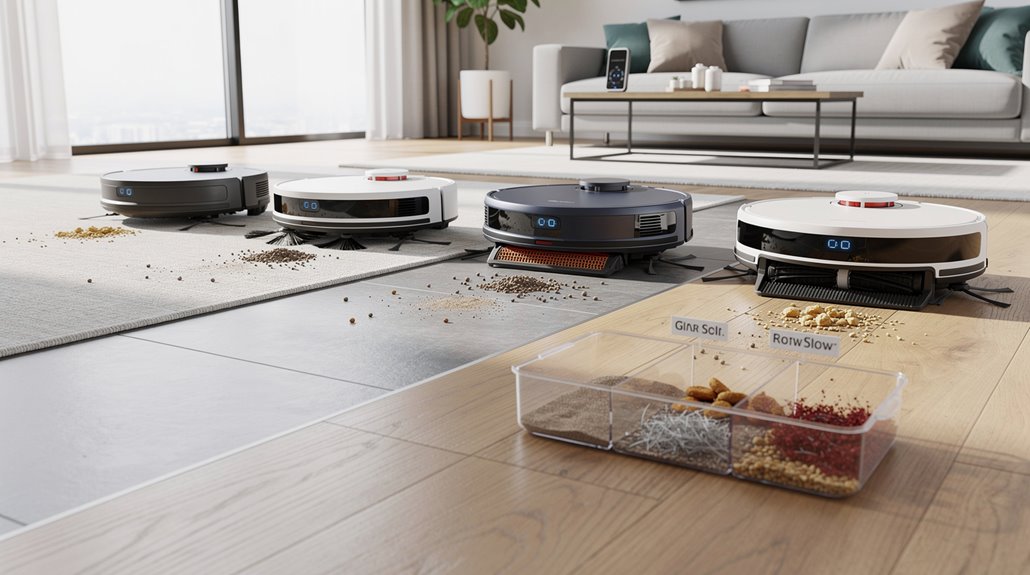
Why does a robot vacuum rated at 10,000 Pa sometimes clean worse than one rated at 7,000 Pa. Different manufacturers test under different conditions, so those numbers don’t mean the same thing across brands.
A 7,000 Pa model with better brush design and airflow optimization often outcleans a poorly engineered 10,000 Pa competitor in your actual home. System design factors like sealed airflow channels, filter efficiency, and dustbin capacity determine whether that peak suction pressure actually reaches your floors and converts into real cleaning results. Robot vacuums typically deliver lower suction than cordless models—usually between 15–50 Air Watts or 3–10 kPa—because of their compact motor and battery constraints for maintaining a slim profile and autonomous operation.
How Air Path Design Determines Actual Suction at the Brush Head
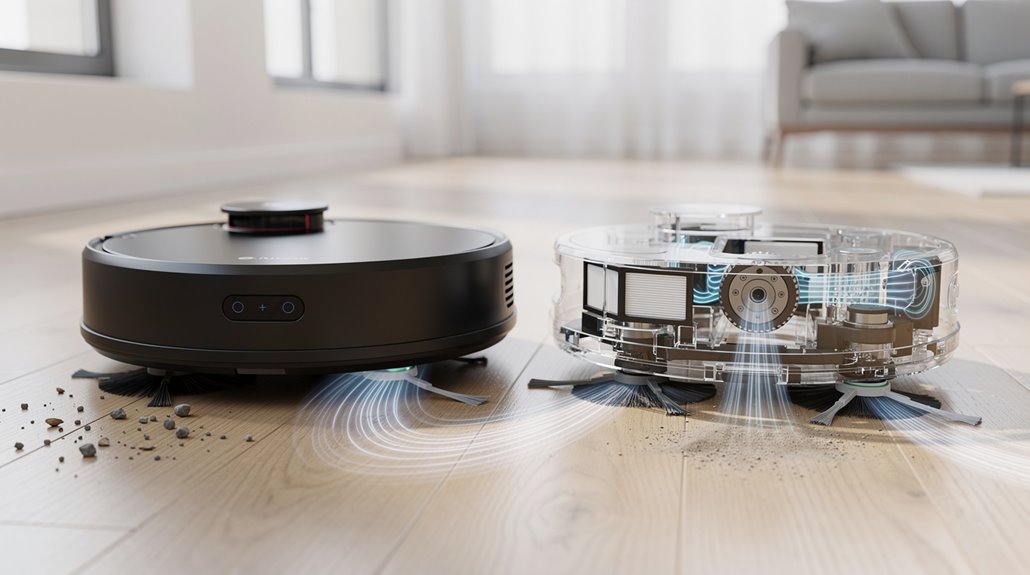
You’ll notice that a narrower intake diameter forces air to move faster through the same volume, which sounds beneficial until that velocity hits your brush head—turns out high speed with minimal volume doesn’t lift much debris.
Your filter type matters just as much as the motor itself; a clogged HEPA filter or restrictive dustbin design can choke airflow so much that you lose suction performance despite what the Pa rating claims on the box. Air leaks in long or curved air channels similarly undermine headline suction numbers by allowing pressure to escape before reaching the floor contact point. Motor quality and duct design work together to reduce air resistance while maintaining consistent suction force throughout the air path.
How intake diameter affects suction velocity at the cleaning contact point
The intake diameter of a robot vacuum doesn’t directly measure suction power—it shapes how fast air actually moves at your floor.
A narrower intake accelerates air velocity at the brush head, following the continuity equation. Safety factors should be considered when designing the intake pathway to prevent excessive vacuum stress on components. Excessive air velocity can cause turbulence and reduce cleaning efficiency, similar to how water velocities above recommended thresholds create air entrainment in pump systems.
Wider intakes sacrifice velocity but accept more debris.
Mismatch between intake size and duct design drops brush head suction velocity significantly, regardless of raw CFM ratings.
How filter type and condition reduce effective airflow at output
Air intake diameter gets you halfway there—the other half lives in what happens after the air gets pulled in. Your filter type determines how much suction resistance you’re fighting. HEPA filters capture 99.5% of particles but create airflow drag. Clogged filters tank performance faster than you’d expect. Multi-stage cyclone systems separate dust upfront, preserving airflow to your brush head. Pre-motor filters protect the vacuum’s motor by blocking dirt and debris before it reaches internal components, which maintains steady airflow and strong suction throughout the cleaning cycle. A 50% suction power loss can occur from filter clogging alone, especially in pet-heavy homes or during deep cleaning sessions.
| Filter Type | Particle Capture | Resistance Level | Maintenance | Output Impact |
|---|---|---|---|---|
| HEPA only | 99.5% at 2 microns | High | Weekly cleaning | Declining suction |
| Cyclone + HEPA | 99.5% via separation | Moderate | Monthly cleaning | Sustained suction |
| Polypropylene micro | 95% fine particles | Low | Frequent emptying | Moderate suction |
| Washable cartridge | 98% particles | Moderate | Rinse monthly | Consistent output |
| Clogged filter | Drops to 60% | Very high | Immediate clean | Poor cleaning |
How Brush Roll Geometry Affects Debris Pickup Independent of Pa Rating
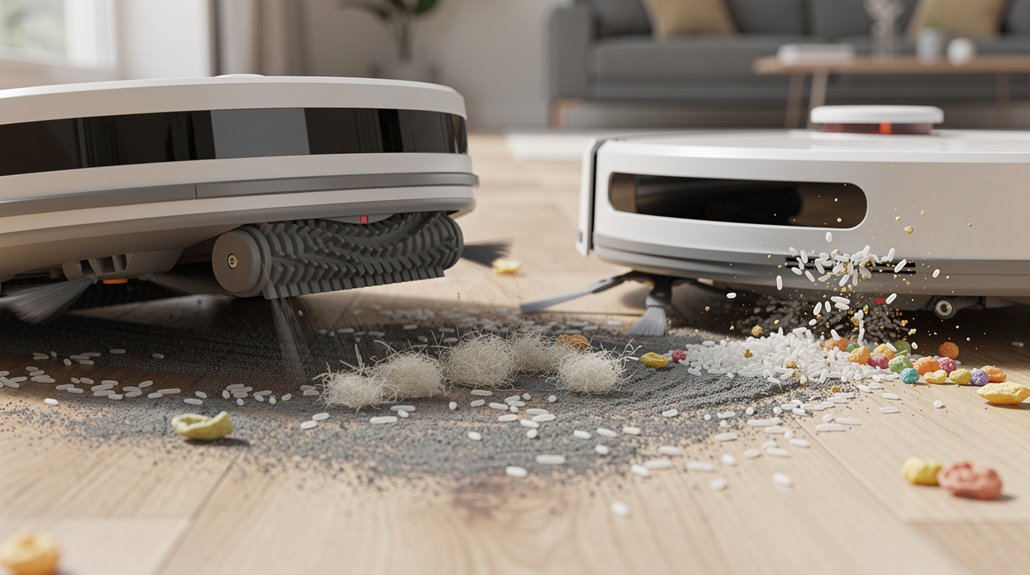
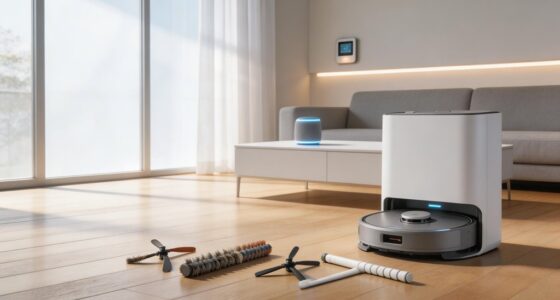
When you’re comparing robot vacuums, suction power gets all the attention—but what actually lifts dirt off your floor is often the brush roll itself.
While suction power dominates the conversation, the brush roll is often what truly lifts dirt from your floors.
A textured, inclined surface moves debris toward the bin without relying solely on robot vacuum airflow. Advanced models like the DEEBOT X9 PRO OMNI use primary brush roll agitation to lift dirt from edges while maintaining strong suction performance.
Hybrid bristle designs prevent scratching while agitating dirt effectively. Side brush effectiveness depends on length and flexibility, rotation speed, and angle positioning to optimize debris collection toward the suction stream.
Geometry matters more than Pa ratings alone suggest for real-world pickup.
What Real-World Robot Vacuum Suction Performance Indicators to Look For
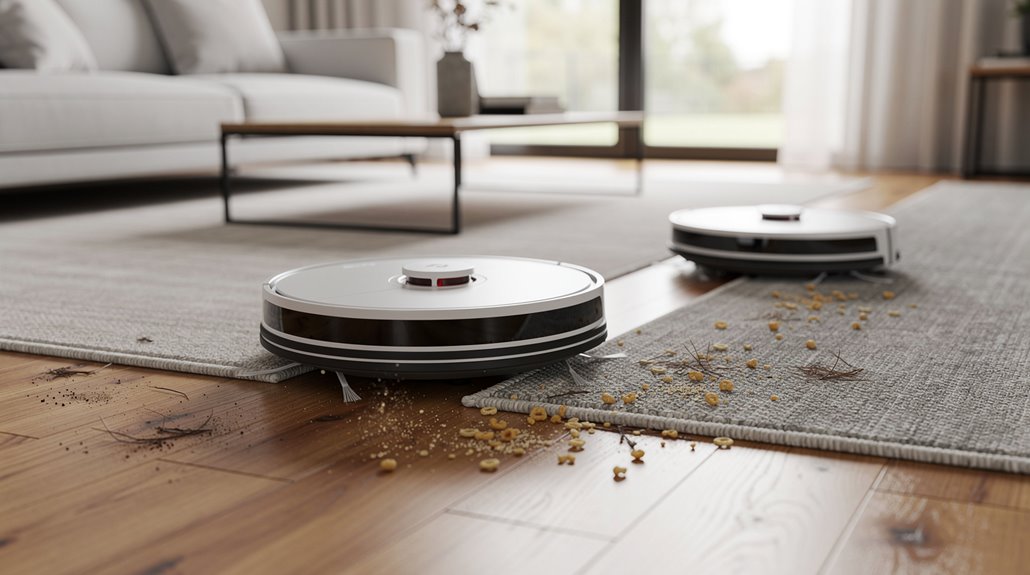
Third-party carpet pickup tests from labs like the Korea Consumer Agency measure actual debris collected rather than just pressure ratings, revealing that a vacuum pulling 18,000 Pa might only deliver 80 watts of real cleaning power—something the manufacturer’s spec sheet conveniently skips.
You’ll find that sand and pet hair demand different suction levels: sand gets lifted by sustained airflow and floor contact, while hair gets tangled by brush design before suction even matters. The Korea Consumer Agency test found that Chinese models advertising 18,000–48,000 Pa recorded only 58–160 W actual suction, demonstrating the vast gap between marketed pressure and genuine cleaning performance. Vacuum Wars similarly measures suction at the brushhead housing rather than at the motor to reflect the actual power available at your cleaning interface.
When you’re comparing models, look for published DPU (Dust Pick-Up Rate) percentages on carpet and hard floors, because that’s what tells you how much debris actually leaves your home versus how many pascals the motor theoretically produces.
What third-party carpet pickup tests reveal that spec sheets omit
Beyond what manufacturer spec sheets promise, real-world carpet pickup tests expose a gap between suction power numbers and what actually gets cleaned. You’ll notice models rated equivalently perform wildly different on embedded debris. Brush design matters more than specs suggest. Debris detection systems adapt to conditions, but lack of brush agitation sabotages results regardless of suction. Testing across 18 top robot vacuums from multiple brands reveals that even premium models with identical suction ratings achieve vastly different cleaning outcomes in practical home environments. Auto-empty systems that leave debris caked into filters compound suction loss over time, creating performance degradation invisible in initial spec comparisons.
| Model | Spec Claims | Real Carpet Results | The Gap |
|---|---|---|---|
| Roborock Saros Z70 | 100% hard floor | 59.25% carpet | Embedded debris fails |
| iLife V3S Pro | Budget option | Left sections untouched | No brush roller |
| Ecovacs Deebot N20 | Mid-tier power | 83% carpet pickup | Solid performance |
How debris type changes which suction level is relevant
The spec sheets and carpet tests we’ve covered so far tell you one thing: raw suction numbers don’t work the same way for every mess you’ll actually encounter.
Fine dust needs strong airflow. Larger debris needs adequate Pa rating. Most robot vacuums let you adjust robot vacuum suction modes, so you’re matching power to what’s actually on your floor rather than running maximum constantly. Higher suction reduces battery runtime, so selecting the appropriate mode for each cleaning task helps balance power with coverage area needs. Real-world cleaning performance depends more on brush design and airflow than on peak Pa specifications alone.
How to Use Suction Mode Settings to Evaluate Robot Vacuum Performance
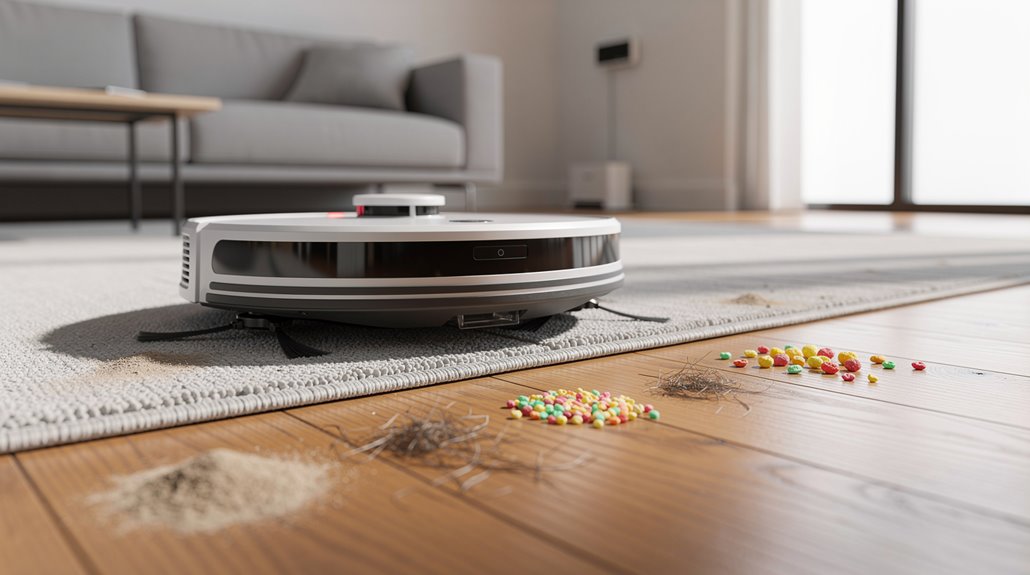
Evaluating a robot vacuum’s real performance means actually testing its suction modes on your own floors, not just checking the spec sheet.
Switch between standard and boost modes on your carpet to measure visible debris pickup. Pay attention to how the vacuum handles different floor types, as auto suction adjustment on rugs ensures the machine matches its power to surface needs rather than running at constant intensity.
Test quiet mode on hard floors to confirm battery claims hold up.
A robot vacuum suction comparison based on real-world testing beats manufacturer ratings every time. Remember that suction and airflow must work together—strong suction alone won’t effectively transport fine dust or hair into the dustbin without adequate airflow to move debris through the machine.
Which Suction Specs Actually Predict Cleaning Performance on Carpet
When you’re shopping for a robot vacuum, Pa ratings feel like the obvious thing to trust—higher numbers should mean better cleaning, right. Not quite. Real-world suction performance depends on brushroll design and debris detection, not just raw Pa. The Roborock S8 MaxV Ultra skips listing Pa specs entirely yet outperforms competitors on carpet. Mid-tier vacuums score 75.5% pickup rates matching flagships. Twin rubber brushrolls perform well on both low- and high-pile carpets while handling pet hair effectively. Models with adaptive suction sensors automatically increase power when transitioning to carpet, delivering more consistent cleaning results than static Pa ratings alone. Test data beats manufacturer claims every time.
Frequently Asked Questions
How Do I Compare Suction Power Between Robot Vacuums From Different Manufacturers?
You can’t directly compare Pa ratings across manufacturers since testing methods vary. Instead, you’ll want to review independent hands-on tests, dust pickup rates, and real-world performance reviews for accurate comparisons.
Why Do Two Vacuums With Identical Pa Ratings Clean Differently on Hardwood Versus Carpet?
You’ll find identical Pa ratings perform differently because brush design, auto-adjustment modes, and carpet detection vary between models. Your vacuum’s actual pickup depends on how it adapts to each surface, not just raw suction power alone.
What Independent Testing Organizations Provide Reliable Robot Vacuum Suction Comparisons?
You’re steering through a minefield where specs deceive like mirages. RTINGS.com and Vacuum Wars provide your compass—they’ve independently tested dozens of models using standardized protocols, revealing how suction truly performs beyond pascals.
How Much Suction Power Does a Robot Vacuum Actually Need for Pet Hair?
You’ll need at least 4,000 Pa for basic pet hair removal, though 8,000 Pa works better for embedded carpet hair. For thick or long-haired pets, you’d want 10,000 Pa or higher for peak results.
Can I Test Robot Vacuum Suction Power Myself at Home Accurately?
You can achieve moderate accuracy for around $60 using a manometer and anemometer. While home testing won’t match lab-grade precision, you’ll reliably measure Water Lift and estimate Air Watts by combining both methods for meaningful comparisons.
Conclusion
You’ve now seen that PA ratings alone won’t tell you what actually gets picked up. Real performance comes down to air path efficiency, brush design, and how the vacuum handles your specific floor type. When you’re comparing models, dig into reviews testing carpet performance and check what suction mode settings actually change. The spec sheet is a starting point, not your answer.