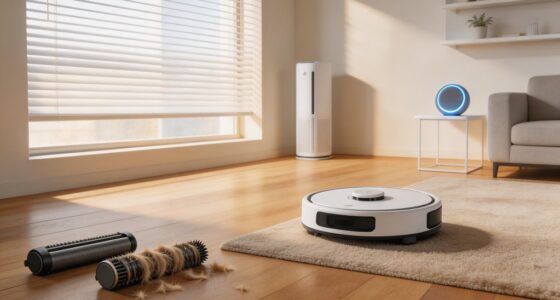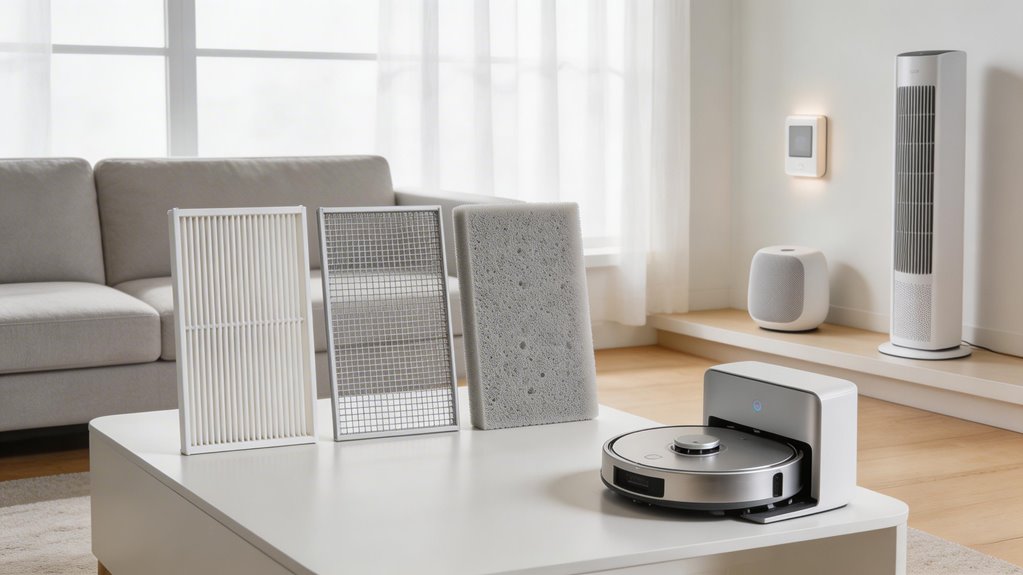
Standard foam and mesh filters catch everyday lint before it reaches your motor—they’re the first line of defense but let tiny particles through. True HEPA filters trap 99.97% of 0.3-micron particles, which matters if you’ve got allergies or pets, though they need replacing every three to six months. Washable filters cut costs but degrade with each wash and can’t replicate HEPA’s protection. Your choice hinges on household needs versus maintenance tolerance, and understanding those trade-offs reveals which type actually keeps your vacuum working.
Key Points
- Standard filters use foam and mesh to trap lint and larger debris, extending main filter life but offering minimal airborne contaminant protection.
- True HEPA filters capture 99.97% of 0.3 micron particles, making them ideal for allergy and asthma sufferers seeking airborne protection.
- Washable filters restore short-term performance through cleaning but degrade with repeated washing, eventually requiring replacement to maintain filtration efficiency.
- HEPA filters last three to six months with weekly maintenance, while standard filters need replacement every two to three months.
- Filter selection should match household needs: HEPA for allergies and pets, standard for budget-conscious users, or combination filters for odor concerns.
How Standard Foam and Mesh Filters Work in Robot Vacuums
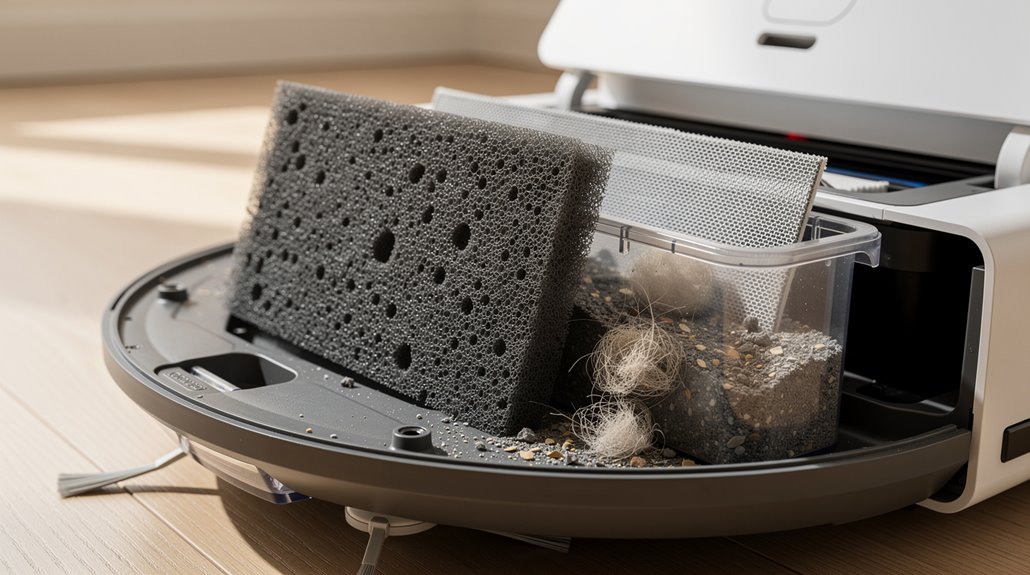
When you’re looking at robot vacuum filters, you’ll notice that most models under $500 use a two-stage setup: foam and mesh working together before the air hits the main filter.
A standard foam filter robot vacuum traps soft debris like lint while mesh catches rigid particles.
This dual approach extends your main filter’s life and keeps suction steady by handling the bulk of everyday dust before finer filtration kicks in. Multi-stage combinations like foam and mesh work as pre-motor filters to protect the motor by blocking dirt before it reaches internal components. Proper maintenance of these pre-filters through monthly cleaning with cool water and mild soap prevents clogging and ensures your robot vacuum maintains optimal performance.
How True HEPA Filters Differ from Standard Robot Vacuum Filters
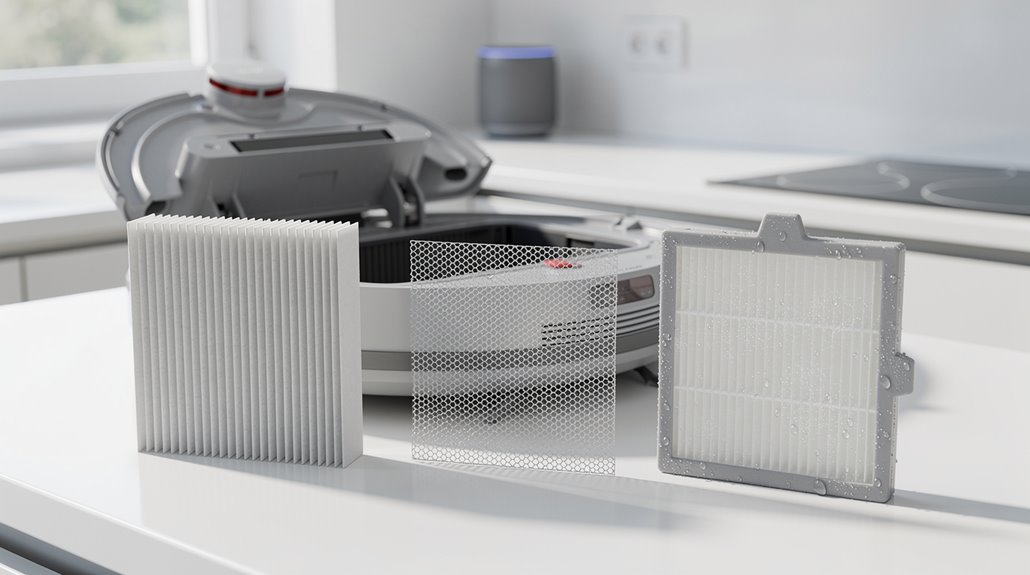
True HEPA filters target particles as small as 0.3 microns—about 100 times finer than what standard foam and mesh filters catch—which means they actually trap allergens and dust mites instead of letting them recirculate into your air.
If you’re managing allergies or asthma, you’ll want at least an H13-grade HEPA filter, which captures 99.95% of those tiny particles; H14 goes higher at 99.995%, though the trade-off is slightly more motor strain from the denser material. ULPA filters represent an even higher tier of filtration, removing 99.999%+ of particulate matter down to 0.3 microns and smaller, though they’re typically reserved for the most demanding hygiene environments. Be aware that some manufacturers quote high efficiency percentages only for larger particles like 2 microns, so verify the Department of Energy standard benchmark of 0.3 microns when comparing products.
Standard filters lack any certified efficiency rating and typically only snag larger debris, so they won’t help much if you’re sensitive to airborne contaminants.
The particle size threshold difference between HEPA and standard filtration
The difference between HEPA and standard robot vacuum filters comes down to one critical measurement: how much they let through at their weakest point.
Your hepa robot vacuum filter captures 99.97% of 0.3 micrometer particles—that’s where most filters fail worst. This most penetrating particle size is the standard efficiency benchmark across EPA, HEPA, and ULPA classifications. True HEPA filters are designed to trap particles down to 0.3 microns, which prevents dust and particles from reaching your vacuum’s motor and systems.
Standard filters let far more slip through at that same size. You’re looking at thousands of particles escaping versus hundreds with true HEPA.
Which filter grade to specify for allergy and asthma management
If you’re dealing with allergies or asthma, picking the right filter grade matters more than you’d think—it’s not just about suction power. You’ll want true HEPA or F9-rated filters for an allergy robot vacuum filter.
Standard filters miss particles under 10 microns, which means irritants escape back into your air. True HEPA captures 99.97% down to 0.3 microns, protecting your respiratory system where it counts. HEPA filters remove allergens like pollen, pet dander, dust mites, and tobacco smoke that commonly trigger allergic reactions. In Europe, HEPA ratings are designated as H13 to U16, with higher numbers indicating superior filtration performance for even better protection against ultrafine particles.
How Washable Filters Work and What They Cannot Replace
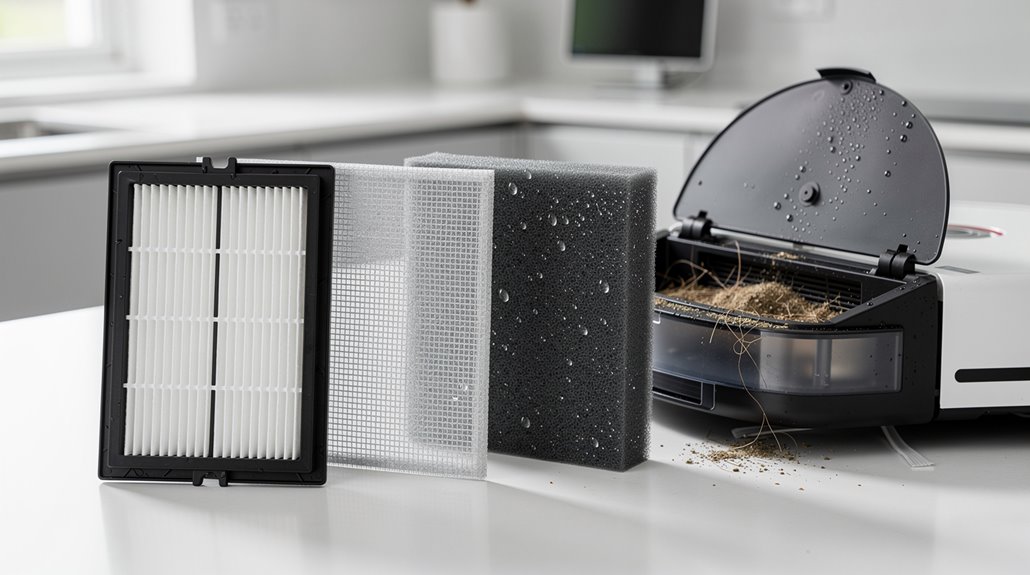
You’ll notice that washable filters lose some filtration efficiency with each cleaning cycle because the rinsing process can slightly compress or alter the filter material’s structure over time.
When you spot persistent odors even after a thorough rinse, visible damage, or a noticeable drop in suction that cleaning doesn’t fix, that’s your sign the filter’s done—water can only refresh it so many times before replacement becomes necessary. For optimal performance, clean filters at least once a month, with dust bin clearing recommended once a week to prevent buildup that accelerates filter degradation. To maintain efficiency, you should replace filters every 3 to 6 months depending on your usage patterns and home conditions.
The real catch is that washable filters can’t ever stand in for HEPA filters, which trap particles at 0.3 microns with 99.97% efficiency, so if allergies matter to you, water damage to a HEPA filter means you’ve lost that protection entirely.
How washing a filter affects its filtration efficiency over repeated cycles
Washing a filter restores its performance in the short term, but what happens across multiple cleaning cycles tells a different story.
Your washable robot vacuum filter stays strong if you dry it completely each time. Skip proper drying, though, and gradual clogging fades performance. Monthly washing maintains suction when done right, but repeated cycles eventually wear the material down. Over time, washable filter materials lose density and cannot capture particles as effectively as when new, meaning replacement eventually becomes necessary despite proper maintenance. Keeping a backup filter available ensures you always have a dry, clean filter ready while another completes its drying cycle.
When a washable filter requires full replacement despite regular cleaning
Regular washing keeps your washable filter working well for a while, but it can’t fix what time and use wear away.
The foam or felt material breaks down structurally after repeated cleaning cycles. Once that happens, fine particles escape back into the air.
Cleaning removes visible dirt, but not the microscopic damage to filter fibers. Even washable HEPA filters have a limit to the number of effective washes before their performance declines significantly. This degradation also means the filter becomes less effective at trapping allergens, allowing particles that were previously captured to be released back into your home. Eventually, you need replacement to restore performance.
How Filter Type Affects Robot Vacuum Suction Performance Over Time
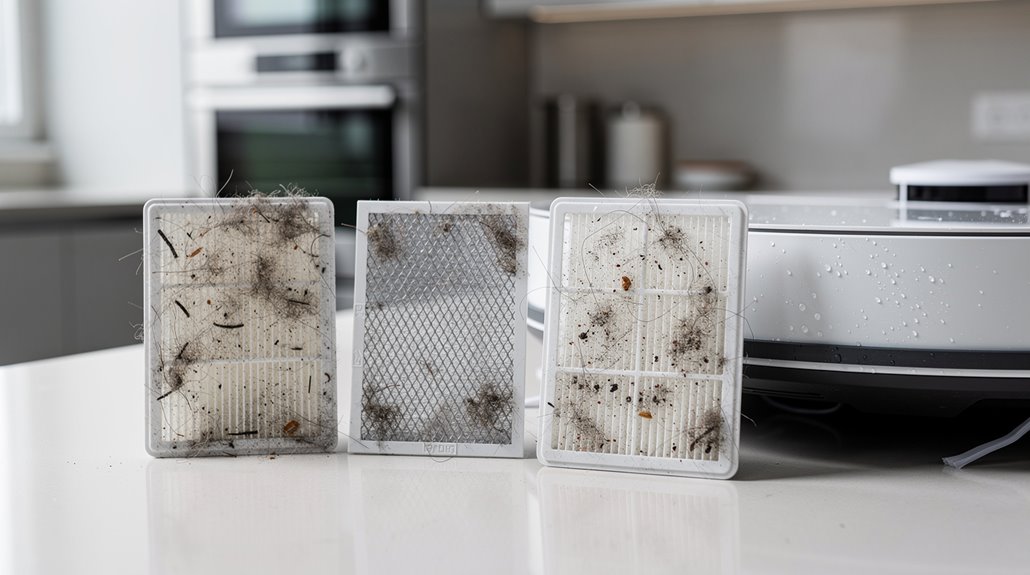
Since your robot vacuum’s filter is basically the gatekeeper between dirt and air, what happens to it directly shapes how hard your vacuum can actually clean.
HEPA filters maintain robot vacuum filter efficiency longest because they trap particles inside. Carbon filters preserve suction better than foam ones do. But any filter—regardless of type—loses effectiveness when clogged, degrading your motor’s ability to sustain consistent pressure over time. Regular cleaning of filters and removal of blockages prevents reduced suction from compounding over the vacuum’s operational life. Most manufacturers recommend inspecting and cleaning your filter every 2–4 weeks to maintain optimal performance and extend the lifespan of your cleaning system.
How Often to Replace Each Robot Vacuum Filter Type
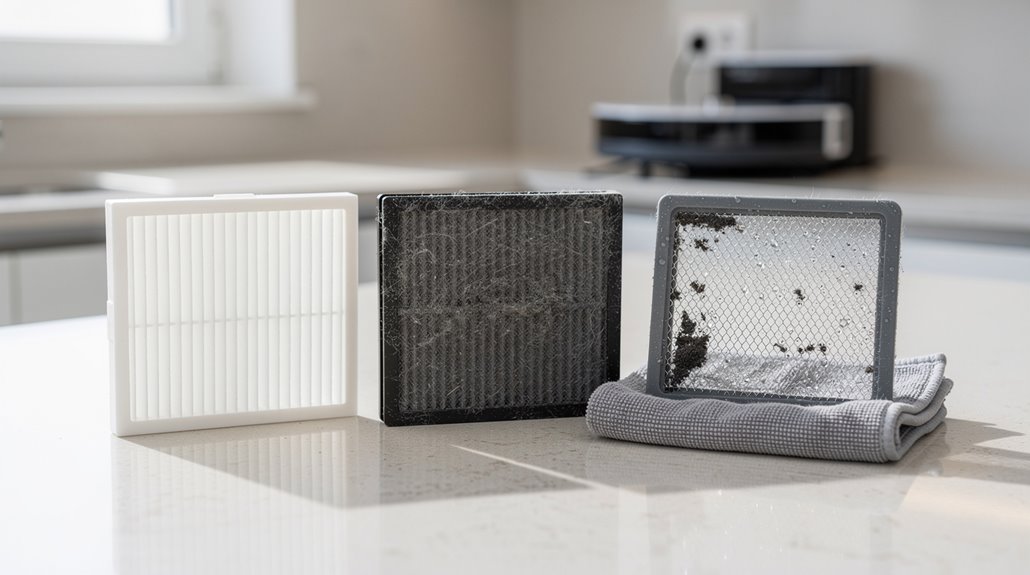
Your robot vacuum’s filter lifespan depends almost entirely on what type you’ve got and how hard your home works it.
HEPA filters typically last three to six months with weekly maintenance. The vacuum’s accessories section in settings can track remaining hours before replacement is needed.
Standard filters need replacement every two to three months.
Washable filters extend life through regular cleaning but eventually degrade. Even with consistent washing, these filters still require eventual replacement as the media loses filtration efficiency over time.
Pet owners should plan on the shorter end of any robot vacuum filter replacement schedule.
Which Robot Vacuum Filter Type Suits Your Household
Now that you know how often to replace each filter type, the real question becomes which one actually fits what’s happening in your home.
Pet owners need HEPA for dander capture. Allergy sufferers benefit from true HEPA’s 99.97% efficiency. Budget cleaners use standard filters fine. Frequent users prefer washable foam for robot vacuum filter maintenance costs. For homes with both pets and odor concerns, combination HEPA and activated carbon filters provide comprehensive air purification by addressing particulate matter and gaseous contaminants simultaneously. Match your household’s actual needs, not marketing claims. True HEPA filters include serial numbers and test documentation to verify their authenticity and performance standards.
Frequently Asked Questions
Can I Use a HEPA Filter in a Robot Vacuum Not Designed for It?
You shouldn’t use a HEPA filter in a vacuum not designed for it. You’ll risk poor sealing, reduced filtration efficiency, and bypassed airflow specifications. Stick with your manufacturer’s recommended filters for peak performance.
Do Washable Filters Lose Effectiveness After Multiple Cleaning Cycles?
Yes, you’ll lose filtration effectiveness—your washable filters degrade with each cleaning cycle, experiencing up to 31% efficiency loss after just one wash. Water damages the fiber mesh structure, enlarging pores irreparably.
Are Combination Filters With HEPA and Foam More Expensive Than Single-Type Filters?
Yes, you’ll find combination filters cost 2-5 times more per unit than single-type filters. You’re paying premium prices because you’re getting dual functionality—HEPA filtration plus foam pre-filtering—bundled together in one package.
How Do Environmental Factors Like Humidity Affect Filter Lifespan?
You’re watching moisture creep into your filter’s fibers, breeding grounds expanding. Humidity shortens your filter’s lifespan dramatically—you’ll replace washable filters every 1-2 months instead of 2-4, as dampness accelerates degradation and mold growth.
Can Pet Hair Clog Filters Faster Than Regular Household Dust?
Yes, pet hair clogs your filters faster than regular dust. Your pet hair embeds in carpets deeply, requiring stronger suction. Hair wraps around brushes, decreasing effectiveness and clogging filters quicker than fine dust particles.
Conclusion
You’ll match your filter choice to what your home throws at it. Standard filters cost less upfront but need replacing yearly. HEPA filters trap allergens better, washable ones save money long-term. As they say, you get what you pay for—pick based on your allergies, pet hair volume, and budget. Your vacuum’s suction depends on keeping that filter clean, whatever type you choose.