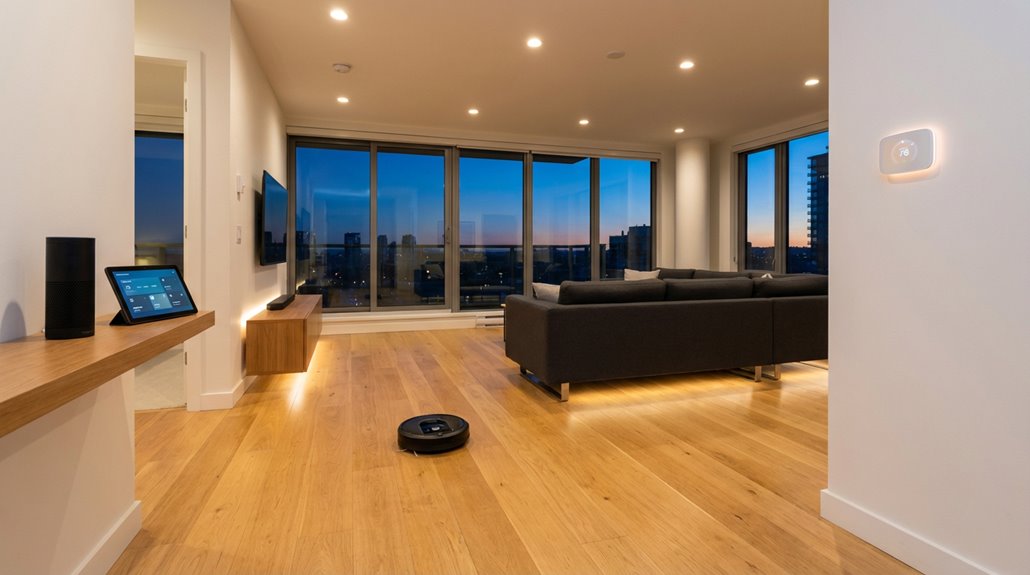
Robot vacuums marketed as universal cleaners frequently fail on hard floors, scattering fine grit and debris rather than capturing it. For homes with hardwood, tile, or stone surfaces and low-clearance furniture, brush design, suction consistency, and chassis height determine whether a unit cleans or redistributes dirt.
We evaluated five robot vacuums against the specific demands of hard floor households: debris containment at the brush roll, suction performance across grout lines and surface transitions, physical clearance for low-profile furniture, and dock or dustbin capacity for fine particulate.
The five models reviewed are the Tikom L8000 Plus, eufy L60, Eureka E20 Plus, Shark AI Ultra, and Roborock Q7 M5+. By the end, you will have the technical basis to identify which unit fits your floor type and furniture constraints.
Key Points
- Rubber rollers are ideal for hard floors, collecting debris without scratching sealed hardwood or tile unlike traditional bristle brushes.
- Suction between 2,000–4,000 Pa handles most hard-floor messes, but higher suction aids stubborn debris with correct brush design.
- The Eureka E20 Plus offers 8,000 Pa suction and a 13-cone cyclonic system separating 98% of dust before the filter.
- The Roborock Q7 M5+ delivers 10,000 Pa suction with a tangle-resistant JawScraper brush, ideal for pet hair on hard floors.
- LiDAR-equipped models like the Shark AI Ultra and Tikom L8000 Plus provide accurate mapping, room segmentation, and reliable low-light navigation.
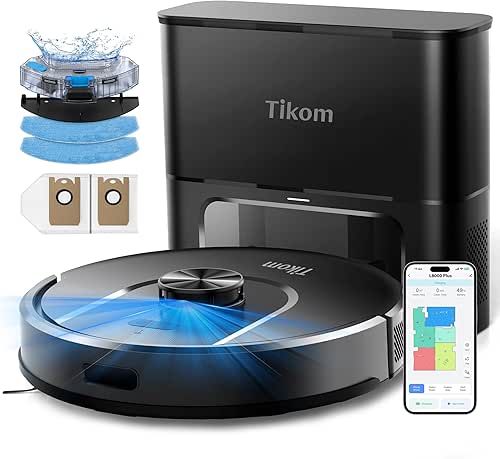
| Tikom Robot Vacuum and Mop with Self-Emptying Base (L8000 Plus) |
|
Best Value Pick | Suction Power: 6,000 Pa | Self-Empty Capacity: 3L dustbag; up to 90 days hands-free | Navigation Type: 360° LiDAR scanning | VIEW LATEST PRICE | Read Our Analysis |
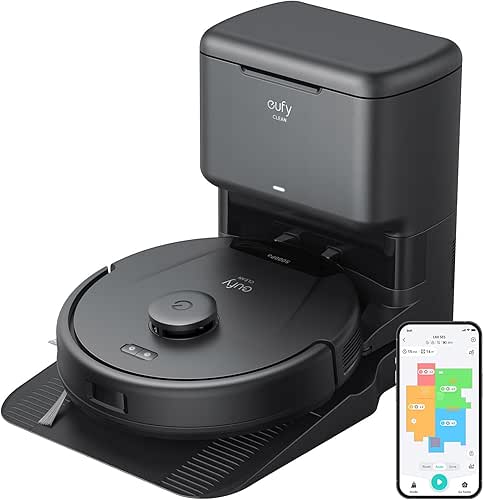
| eufy L60 Robot Vacuum with Self-Empty Station |
|
Best for Pet Hair | Suction Power: 5,000 Pa | Self-Empty Capacity: 2.5L dustbag; up to 60 days hands-free | Navigation Type: iPath LiDAR navigation | VIEW LATEST PRICE | Read Our Analysis |
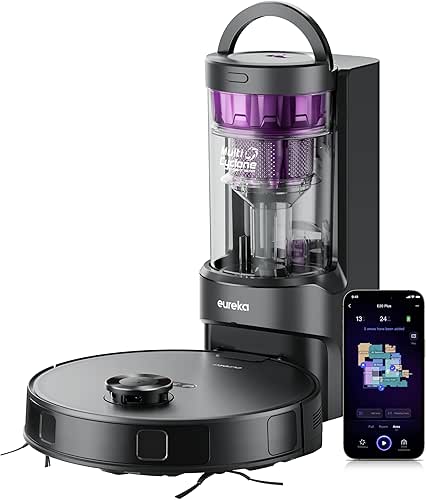
| Eureka E20 Robot Vacuum with Self-Emptying Station |
|
Most Powerful Suction | Suction Power: 8,000 Pa | Self-Empty Capacity: Bagless station; up to 45 days hands-free | Navigation Type: LiDAR (dual LDS sensors) | VIEW LATEST PRICE | Read Our Analysis |
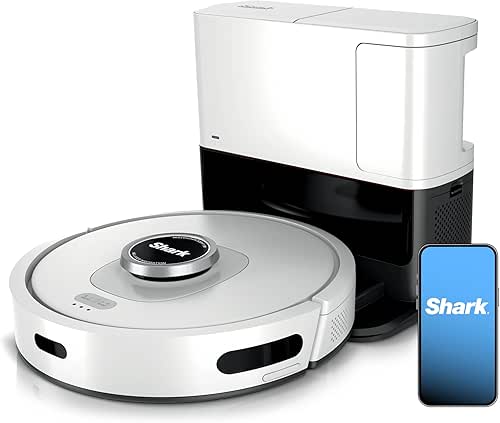
| Shark AI Ultra Robot Vacuum (AV2511AE) |
|
Best Overall | Suction Power: Not specified in Pa; described as powerful suction | Self-Empty Capacity: Bagless XL base; up to 60 days hands-free | Navigation Type: 360° LiDAR vision | VIEW LATEST PRICE | Read Our Analysis |
| Roborock Q7 M5+ Robot Vacuum and Mop |

|
Premium Performance Pick | Suction Power: 10,000 Pa | Self-Empty Capacity: 2.7L sealed dustbag; up to 7–9 weeks hands-free | Navigation Type: PreciSense LiDAR navigation | VIEW LATEST PRICE | Read Our Analysis |
More Details on Our Top Picks
-
Tikom Robot Vacuum and Mop with Self-Emptying Base (L8000 Plus)
Verdict: Best for Pet Hair
The Tikom L8000 Plus is a robot vacuum and mop designed for pet owners with predominantly hard floor surfaces. Key features include 6,000 Pa suction, simultaneous vacuuming and mopping via an integrated mop holder, and 360° LiDAR navigation with app-controlled no-go zones and scheduling across 2.4 GHz and 5 GHz Wi-Fi. The 3-litre self-emptying base requires emptying approximately every 90 days. One limitation is that the mop holder must be manually removed or no-mop zones must be configured to prevent the mop pad from contacting carpeted areas. This suits pet owners with hard floors who want reduced maintenance intervals.
- Suction Power:6,000 Pa
- Self-Empty Capacity:3L dustbag; up to 90 days hands-free
- Navigation Type:360° LiDAR scanning
- Runtime:Up to 150 minutes
- Smart Mapping:Multi-floor mapping; saves up to 5 maps; no-go/no-mop zones, virtual walls
- Voice Control:Amazon Alexa
- Additional Feature:5-map multi-floor storage
- Additional Feature:2.4 GHz & 5 GHz Wi-Fi
- Additional Feature:3L self-emptying dustbag
-
eufy L60 Robot Vacuum with Self-Empty Station
The eufy L60 is a self-emptying robot vacuum suited to pet owners and households with long hair on hard floors.
Key Features:
- Hair Detangling Technology uses a roller-brush slicer to cut wrapped hair before it accumulates
- 5,000 Pa suction clears hair, crumbs, and dust in a single pass
- 2.5L dust bag supports up to 60 days of debris capacity before requiring a change
One limitation is that the L60 has no mopping capability.
Pet owners with hard floors who want hands-off hair management will find this a practical, low-maintenance option.
- Suction Power:5,000 Pa
- Self-Empty Capacity:2.5L dustbag; up to 60 days hands-free
- Navigation Type:iPath LiDAR navigation
- Runtime:Not specified
- Smart Mapping:AI.Map 2.0; multi-floor mapping; no-go zones; room selection
- Voice Control:Not specified
- Additional Feature:Hair detangling technology
- Additional Feature:AI.Map 2.0 app
- Additional Feature:iPath laser navigation
-
Eureka E20 Robot Vacuum with Self-Emptying Station
The Eureka E20 Plus is a hard-floor robot vacuum designed for homeowners managing frequent daily debris who want extended intervals between manual maintenance. Its bagless self-emptying station holds up to 45 days of debris. The 8,000 Pa motor powers a 13-cone cyclonic system that separates 98% of dust before reaching the filter. Two LiDAR sensors support mapping alongside AI 3D obstacle avoidance in low-light conditions. One limitation is that it only connects on 2.4 GHz Wi-Fi, which can cause connectivity issues with dual-band router configurations. This suits hard-floor households prioritizing low-maintenance operation over advanced network compatibility.
- Suction Power:8,000 Pa
- Self-Empty Capacity:Bagless station; up to 45 days hands-free
- Navigation Type:LiDAR (dual LDS sensors)
- Runtime:Up to 180 minutes
- Smart Mapping:LiDAR smart mapping; no-go zones supported
- Voice Control:Amazon Echo and Google Home
- Additional Feature:10mm mop lifting
- Additional Feature:Bagless self-empty station
- Additional Feature:Dual brush heads
-
Shark AI Ultra Robot Vacuum (AV2511AE)
The Shark AI Ultra is a robot vacuum designed for pet owners managing fur on hard floors. The self-cleaning brushroll uses mechanical hair-removal technology to resist wrap buildup. LiDAR navigation maps rooms in a 360° grid pattern, operating reliably in low-light conditions. The bagless base holds up to 60 days of debris before requiring emptying. One limitation is that the robot’s onboard dustbin holds only 0.27 gallons, making mid-session interruptions likely across larger floor areas. This suits pet owners in medium-sized homes who prioritize low-maintenance emptying schedules over high-capacity onboard collection.
- Suction Power:Not specified in Pa; described as powerful suction
- Self-Empty Capacity:Bagless XL base; up to 60 days hands-free
- Navigation Type:360° LiDAR vision
- Runtime:Up to 120 minutes
- Smart Mapping:Precision Home Mapping; AI-powered; object avoidance; adapts to changes
- Voice Control:Amazon Alexa and Google Assistant
- Additional Feature:Matrix Clean navigation
- Additional Feature:Self-cleaning brushroll
- Additional Feature:Bagless XL base
-
Roborock Q7 M5+ Robot Vacuum and Mop
Best for Pet Hair
Roborock Q7 M5+
A robot vacuum and mop designed for pet owners, particularly those with long-haired animals. The JawScraper main brush and tangle-resistant side brush manage pet hair without manual intervention. Suction reaches 10,000Pa, effective on fine debris across hard floors. The RockDock Plus uses a 2.7L sealed dustbag, requiring emptying roughly every seven to nine weeks. One limitation is that it only supports 2.4GHz Wi-Fi, making it incompatible with 5GHz networks. Pet owners with hard floors and moderate hair shedding will get consistent, low-maintenance performance from this unit.
- Suction Power:10,000 Pa
- Self-Empty Capacity:2.7L sealed dustbag; up to 7–9 weeks hands-free
- Navigation Type:PreciSense LiDAR navigation
- Runtime:Not specified
- Smart Mapping:Real-time mapping; no-go zones; multi-room layout support
- Voice Control:Not specified
- Additional Feature:10,000 Pa HyperForce suction
- Additional Feature:JawScrapers anti-tangle brush
- Additional Feature:0% hair-tangling side brush
Factors to Consider When Choosing Robot Vacuums for Hard Floors

When you’re picking a robot vacuum for hard floors, a few specs actually move the needle: suction power, navigation accuracy, battery life, self-emptying capacity, and app or voice control. On hard floors, suction in the 2,000–4,000 Pa range handles most messes without issue, but how the robot maps your space determines whether it cleans efficiently or wanders in circles. Self-emptying docks vary widely — some hold around 30 days of debris, others closer to 60 — so that gap matters if you’d rather not think about it.
Suction Power Matters
Suction ratings — measured in Pascals or air watts — directly affect how well a vacuum pulls fine dust and embedded grit from low floor gaps. Higher numbers help with stubborn debris, but without the right brush design, strong suction can scatter lightweight particles or push fine material deeper into grout lines. Adjustable suction levels offer practical benefits: lower settings conserve battery and reduce dust displacement on open surfaces, while higher settings handle compacted debris. Pairing suction with a HEPA-grade filter ensures fine particles stirred up by the brush are captured rather than redistributed.
Navigation and Mapping Accuracy
Navigation accuracy determines how consistently a robot vacuum covers every section of a floor rather than repeatedly cleaning the same areas while missing others. LiDAR-based robots use 360° laser scanning to construct accurate floor plans, producing consistent coverage and reliable pathing on hard floors. SLAM technology updates the map when furniture is rearranged, allowing the robot to adapt without losing its reference points. Multi-floor mapping and room segmentation enable targeted cleaning and no-go zones without manual intervention. Auto-recharge-and-resume with position-aware mapping ensures the robot returns to where it stopped rather than restarting from the beginning, eliminating redundant passes and reducing total cleaning time.
Battery Life Considerations
Battery life determines whether a robot vacuum completes a full cleaning cycle without interruption. For open layouts and multi-room homes, where cycles regularly exceed 60 minutes, target a model rated for 90–150 minutes per charge. Auto-recharge-and-resume adds practical value: the robot docks when power runs low, recharges, and continues from the same position without manual input. Higher-voltage lithium-ion batteries tend to deliver longer, more consistent runtime than lower-voltage alternatives. Note that elevated suction settings and active mopping can reduce runtime by 30–50%, so review manufacturer figures at each power level, not only the peak rating. Faster recharge times become a priority in pet or high-debris households.
Self-Emptying Capacity
Bin size determines how often the base requires attention, and the range across current models is wider than most buyers anticipate. Bins span from under 1.5 liters to over 3.0 liters, with a 2.5-liter bagged dock typically running six to eight weeks between empties in a low-traffic home. Heavy shedding pets or large hard-floor areas can cut that interval to two weeks. Bagged systems keep dust sealed; bagless stations cost less upfront but need more frequent cleaning and filter maintenance. Before purchasing, confirm replacement bag availability and cost, as proprietary bags from some brands carry premium pricing that raises long-term ownership expenses.
App and Voice Control
App functionality and voice control compatibility are practical criteria that determine how much control a robot vacuum delivers after setup. The companion app should support room-specific cleaning, virtual no-go zones, and multi-floor map saving — features that allow precise targeting of hard floors while excluding carpeted areas. Remote adjustment of suction levels and water-flow settings eliminates manual intervention mid-cycle. Wi-Fi compatibility across both 2.4 GHz and 5 GHz bands prevents dropped commands during operation. Auto-recharge-and-resume, scheduled cleanings, real-time notifications, and Alexa or Google Assistant compatibility are each worth confirming before purchase to avoid discovering gaps after the return window closes.
Hard Floor Compatibility
Brush type and suction control are the primary factors determining how well a robot vacuum performs on hard floors.
Soft rubber rollers collect debris without scratching sealed hardwood or tile, while traditional bristle brushes tend to scatter fine particles rather than pick them up. Adjustable suction matters because low settings capture dust without dispersing it, and high settings lift grit without pushing it across the surface. For mopping, adjustable water flow combined with automatic pad-lift or a no-mop zone setting prevents oversaturation on wood floors. A HEPA or fine-particulate filter stops captured dust from recirculating into the room after collection.
Anti-Tangle Brush Design
Dual and side-brush geometries channel debris directly into the suction path on hard floors, reducing scatter and improving pickup efficiency. A low-profile roller operating at the correct rotation speed limits centrifugal force, which is the primary mechanism behind hair wrapping around brush components. Maintaining that balance preserves debris extraction from grout lines without accumulating fiber buildup. For households with long hair, these design specifications determine whether a vacuum requires manual detangling after each use or sustains consistent airflow across extended cleaning sessions.
Frequently Asked Questions
How Often Should I Replace the Filters on My Robot Vacuum?
Replace your robot vacuum’s filters every 2–3 months under normal usage conditions. Homes with pets or allergy sufferers benefit from monthly replacements to maintain air quality and suction performance. Waiting until suction weakens means the filter has already been restricting performance for some time.
Can Robot Vacuums Damage Hardwood Floor Finishes Over Time?
Robot vacuums can damage hardwood floor finishes over time if debris accumulates in the wheels and brushes. Trapped dirt and grit act like sandpaper, grinding against the finish with each pass. Keeping the brush rolls and wheels clean after every few uses prevents this kind of gradual wear.
Are Robot Vacuums Safe to Use Around Pets and Children?
Robot vacuums are generally safe to use around pets and children. Supervising initial interactions is recommended, as curious pets may chase the device. Most models, such as the Roomba j7+, include anti-drop sensors and automatic shutoff features that prevent accidents during operation.
Do Robot Vacuums Work Effectively on Uneven or Textured Hard Floors?
Robot vacuums work effectively on uneven and textured hard floors when equipped with flexible brush rolls and adaptive sensors. These features allow the vacuum to navigate grout lines, surface variations, and textured tiles without losing suction performance. The iRobot Roomba j7+, for example, uses reactive sensor technology to adjust to floor inconsistencies in real time.
Can I Schedule My Robot Vacuum to Clean While I’m Away?
Yes, most robot vacuums can be scheduled to clean while you are away. Many models allow you to set cleaning times through a smartphone app, so the vacuum starts and finishes before you return home. The iRobot Roomba, for example, supports custom scheduling directly through its companion app.
Conclusion
The Roborock Q7 M5+ Robot Vacuum and Mop takes the top spot for hard floor homes with low-clearance furniture. Its 3D obstacle avoidance operates at 2cm ground clearance, and the auto-empty base holds up to 7 weeks of debris before requiring manual disposal. For buyers prioritizing mopping over vacuuming, the Shark is worth a closer look. Watch the full ranked video breakdown on the ProGadgetPicks YouTube channel for a side-by-side comparison of all five products. Next, see our [5 Best Self-Emptying Robot Vacuums roundup on ProGadgetPicks.com](https://www.progadgetpicks.com/best-self-emptying-robot-vacuums) for models that handle dust bin management automatically.